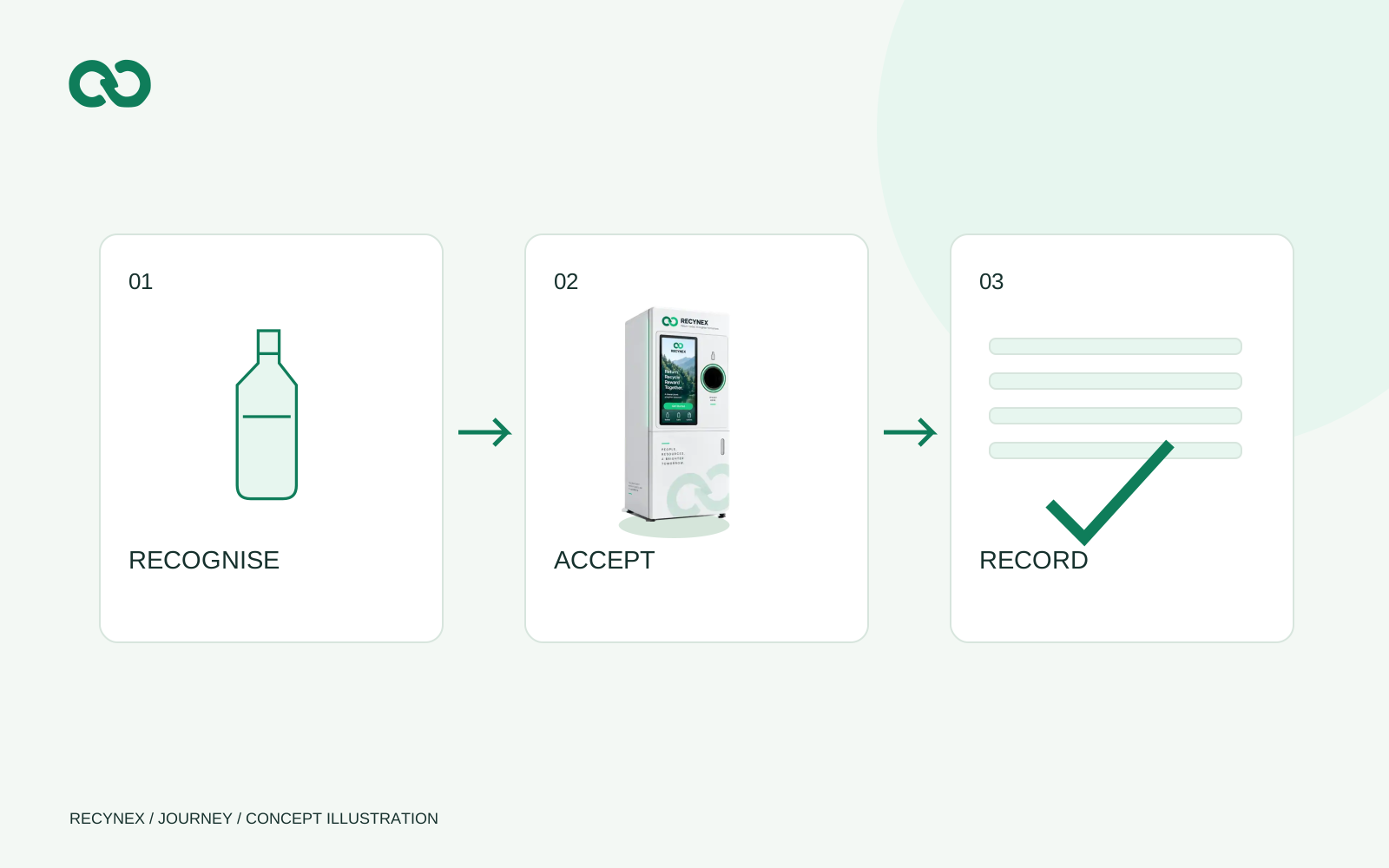
Practical guide
Measure a brand return programme without overstating impact
Separate participation, verified equipment events, material handover and downstream outcomes in a brand programme report.
Reviewed Read moreAlign packaging rules, customer experience, reward accounting and campaign reporting.
Align packaging rules, customer experience, reward accounting and campaign reporting.
Create a controlled list of campaign containers and the evidence required to recognize and physically accept each one. Brand identity alone is not enough to establish eligibility.
Agree who funds any incentive, how a physical acceptance event is verified and how duplicate or reversed events are handled. Rewards require a server-side ledger and a reconciled budget.
Describe participation, accepted returns, service interventions and material handover separately. Use approved customer names, logos and claims only with explicit publication rights.
Before launch, write a reporting dictionary with one row for each public measure. State the source system, unit, time window, duplicate rule and approver. A count of equipment acceptances can support an accepted-return statement. A recycling or emissions statement needs additional downstream evidence and a defensible method. If a campaign spans several sites, agree whether reports are per station, per event or network-wide.
Start with an eligible container that is accepted normally, then walk through an ineligible one, a damaged label, a full station and a delayed benefit. For each outcome, write the exact visitor message and name the organisation that can answer a question. A campaign can have attractive creative and still disappoint participants if a reward screen implies an instant benefit that the sponsor settles later.
If the programme relies on an existing app, decide whether a visitor must identify themselves before or after depositing a container. That choice changes both the user journey and the data contract. Keep personal data collection proportionate to the promised benefit and let the programme owner approve the privacy wording. RECYNEX equipment can produce a defined return event; the sponsor’s system remains responsible for the participant account and the incentive rules it controls.
Brands change packaging, artwork and promotions. A campaign plan needs a change owner, an effective date and a sample test for any new eligible format. Update the machine rules, on-site instructions, app terms and support script together. Keep the prior rule version in the record so a disputed return can be judged against the rules in force at the time, not today’s screen.
Before expanding beyond a pilot, review the accepted-packaging record, support questions and material handover with the store and collection teams. A campaign report should not hide the labour required to keep the points open. That operational feedback is useful even when it does not belong in public promotional copy.
Bring the eligible packaging list, proposed sites, existing participant app and planned incentive rules to a brand programme discussion. Use the programme measurement guide to set claims and evidence before creative work begins.
Separate participation, verified equipment events, material handover and downstream outcomes in a brand programme report.
Reviewed Read moreDesign the boundary between a physically accepted container, programme eligibility and a reward ledger.
Reviewed Read moreUnderstand the different rules, evidence and reconciliation needs behind a deposit refund, a brand-funded reward and a return point with no incentive.
Read moreShare the location, container stream, operating team and systems already in place.