Practical guide
Campus RVM signage: where rejected packaging should go
Design a clear route for containers outside a campus return programme, while keeping local recycling instructions separate from machine acceptance.
Reviewed Read moreSeparate reference samples, unresolved test material and released waste so acceptance evidence survives without claiming that tested packaging has been recycled.
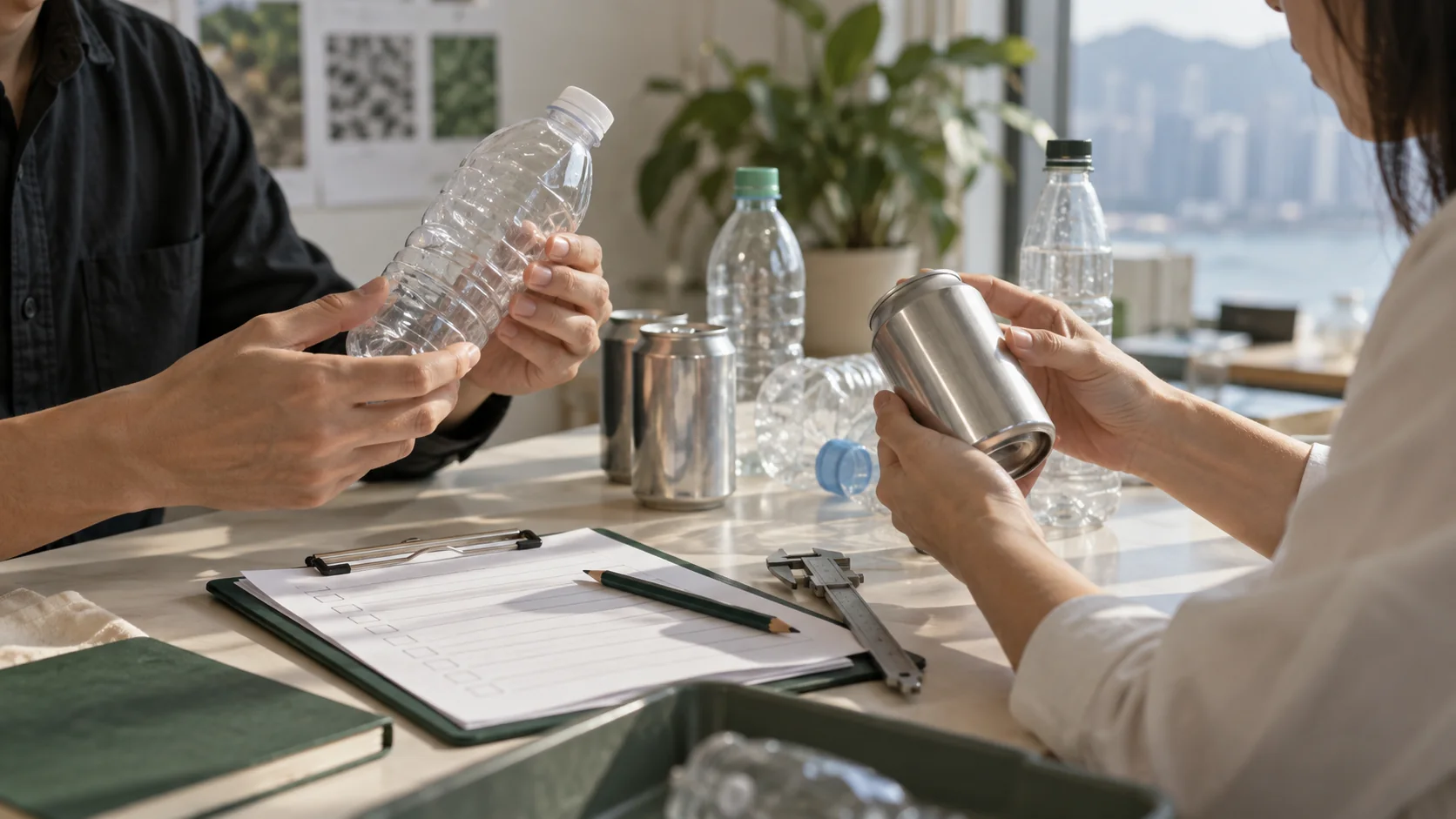
Decide the destination of test bottles and cans before clearing the test area. Keep the representative evidence needed for an approved follow-up; release the remaining material through a confirmed local route. A passed intake test is neither a recycling certificate nor evidence that a deposit has been paid.
Defra’s published waste-hierarchy guidance for England and Wales places prevention before preparation for reuse, recycling, recovery and disposal. Use that jurisdiction-specific reference alongside the local requirements for your test site. The register below is an independent proposed qualification method, not a claim that RECYNEX provides waste collection.
Agree how many physical references the approved test plan needs and who owns them. Retaining every sample indefinitely is not a substitute for useful evidence. Conversely, photographs alone may be insufficient where a later equipment or packaging comparison needs the original sample.
| Sample group | Decision to record |
|---|---|
| Intact reference required for a comparison | Identifier, approved storage location and review owner |
| Unresolved test result | Next authorised test or decision, with a responsible person |
| Unused surplus with no further approved purpose | Confirm whether it can remain a useful sample or enter the applicable waste route |
| Material released after testing | Actual condition, destination and evidence of handover |
Preserve the relationship between sample identifier, market version, label revision and test result. If a destructive test changes the physical sample, record that change rather than treating it as an unchanged reference.
Tell the collector or receiving organisation the actual material and condition. Confirm its acceptance arrangement before mixing the test batch into routine site collections. A rejected, altered or mixed sample should not automatically enter a deposit-return stream merely because an untested example of the product is eligible.
Use the site’s approved storage and handling arrangements. Record the actual handover separately from a proposed destination. If downstream treatment is not verified, report only what is known: retained, awaiting decision or handed over to the named receiving role. Do not report a recycling percentage from a test batch without the necessary downstream evidence.
Should every passed sample be discarded immediately? Follow the approved evidence needs first; retain only the references with a defined purpose and review owner.
Can a test counter be used as a public recycling total? Not by itself. Test observations and verified downstream outcomes are separate records.
Set the qualification scope with RECYNEX Vision and confirm follow-up responsibilities through service planning.
Design a clear route for containers outside a campus return programme, while keeping local recycling instructions separate from machine acceptance.
Reviewed Read moreBuild an RVM request for proposal that compares tested packaging, site fit, software, service, acceptance and commercial exclusions on the same basis.
Read moreBuild an evidence-based acceptance list for the containers your project wants to collect.
Reviewed Read moreTell us what you need to return and where. We can help define the remaining details.
May we use Google Analytics to understand which pages help visitors? Your choice does not affect enquiries. You can change it at any time using Analytics preferences. Privacy notice