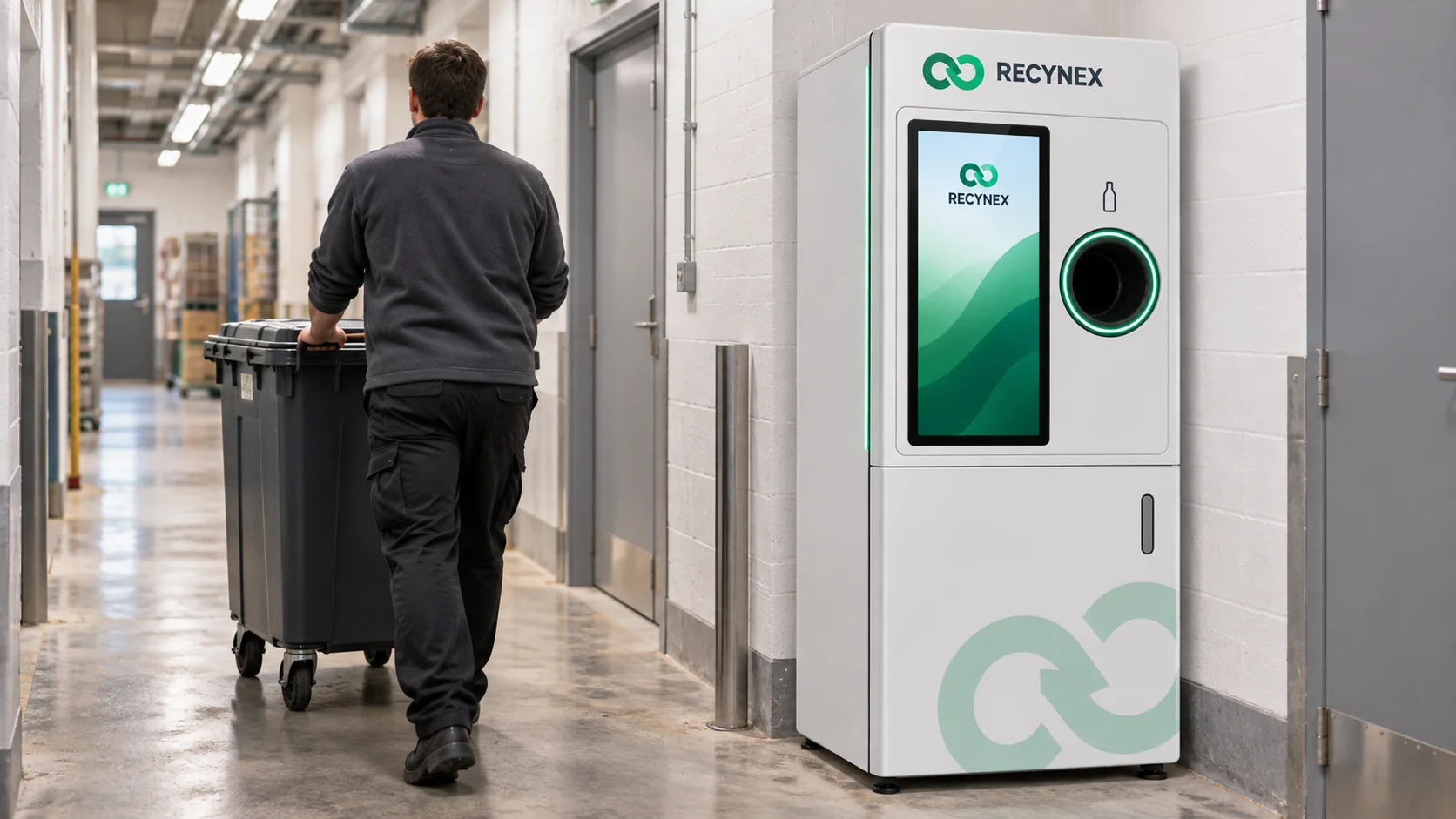
Stock the parts or consumables that the equipment supplier has confirmed for your installed configuration and agreed service arrangement. A generic list copied from another return point cannot tell you which revision fits, who may install it or whether a local stockholding will shorten the interruption.
Separate availability from permission to replace
HSE’s maintenance guidance for Great Britain emphasises manufacturer instructions and competent maintenance personnel. A stocked component does not, by itself, authorise a shop employee to fit it. The worksheet below is a proposed procurement method, to align with the actual equipment manual and local requirements.
Ask the supplier to separate ordinary operating consumables from components requiring trained service personnel. Obtain the approved item reference, supported equipment revision, storage conditions and replacement boundary. Do not infer the parts list from a cabinet photograph or assume that every RECYNEX configuration uses the same components.
Build a stock decision record
| Question |
Evidence to request |
| Does this item fit the installed machine? |
Approved reference and applicable revision |
| Who may replace it? |
Operating manual or agreed service responsibility |
| Would local stock change the recovery time? |
Confirmed dispatch arrangement and availability of the authorised installer |
| Can it remain usable in site storage? |
Supplier storage conditions and any stated shelf-life |
| When should it be reordered? |
Actual consumption and a reviewed replenishment lead time |
Record the stock location and owner. Distinguish an item physically present from one reserved at a service partner. A purchase order is not evidence that a replacement is ready to use.
Start small and review actual consumption
For a pilot, review supplier recommendations alongside observed replacements and replenishment delays. Avoid publishing a promised recovery time before the complete service route has been tested. Having a part on site will not remove the need for diagnosis, an authorised technician or post-maintenance checks.
Keep returned or unapproved parts separate from ready stock. Confirm substitutions with the supplier before use, and update the register after an equipment revision. Treat safety-related faults through the approved unavailable and service procedure rather than improvising a repair.
Common questions
Does a spare-parts kit guarantee uptime? No. It is one input to a service plan, alongside diagnosis, qualified access and confirmation that operation can resume.
Should every site keep identical stock? Only where configuration, permissions and supply arrangements support that decision. Review differences before standardising.
Define the replacement responsibilities through RECYNEX service planning and select the relevant equipment family.