Practical guide
RVM Collection Frequency Planning
Estimate return-point collection intervals from real container mix, peak demand, storage rules and route ownership rather than a generic machine capacity.
Read moreA practical daily, event-driven and service handover checklist for RVM operators, with clear ownership and records rather than assumed service intervals.

An RVM maintenance plan is an assignment of responsibilities, not a single calendar reminder. Routine checks, collection, cleaning, fault response and specialist service have different owners. The exact procedures and intervals must follow the installed configuration, packaging stream and supplier instructions.
| Work type | Typical question | Record to keep |
|---|---|---|
| Opening or shift check | Is the intake available, the instruction clear and the surrounding area safe? | Station, time, checker and exception |
| Event-driven action | Has storage filled, an item jammed or a sensor reported a fault? | Alert, response, material condition and resolution |
| Planned specialist service | What does the approved maintenance schedule require for this configuration? | Work order, parts, technician and return-to-service check |
Do not replace supplier maintenance instructions with a generic internet checklist. Use this table to decide who performs each action and how the site proves it happened.
The operating team should be able to tell the difference between a routine observation and a repair request. A spill on the floor may call for immediate site cleaning; a recurring sensor fault belongs with trained technical service. Assign the boundaries during handover. If a task has no owner, it will tend to reappear as an unexplained outage.
At the start of a shift, confirm the point is approachable and the screen or instructions are legible. Look for visible damage, spills, loose material and a full or incorrectly seated collection container. Follow the equipment’s approved cleaning and isolation procedure; staff should not open protected areas or clear a fault outside their training. Record a problem even if the machine still appears to accept containers.
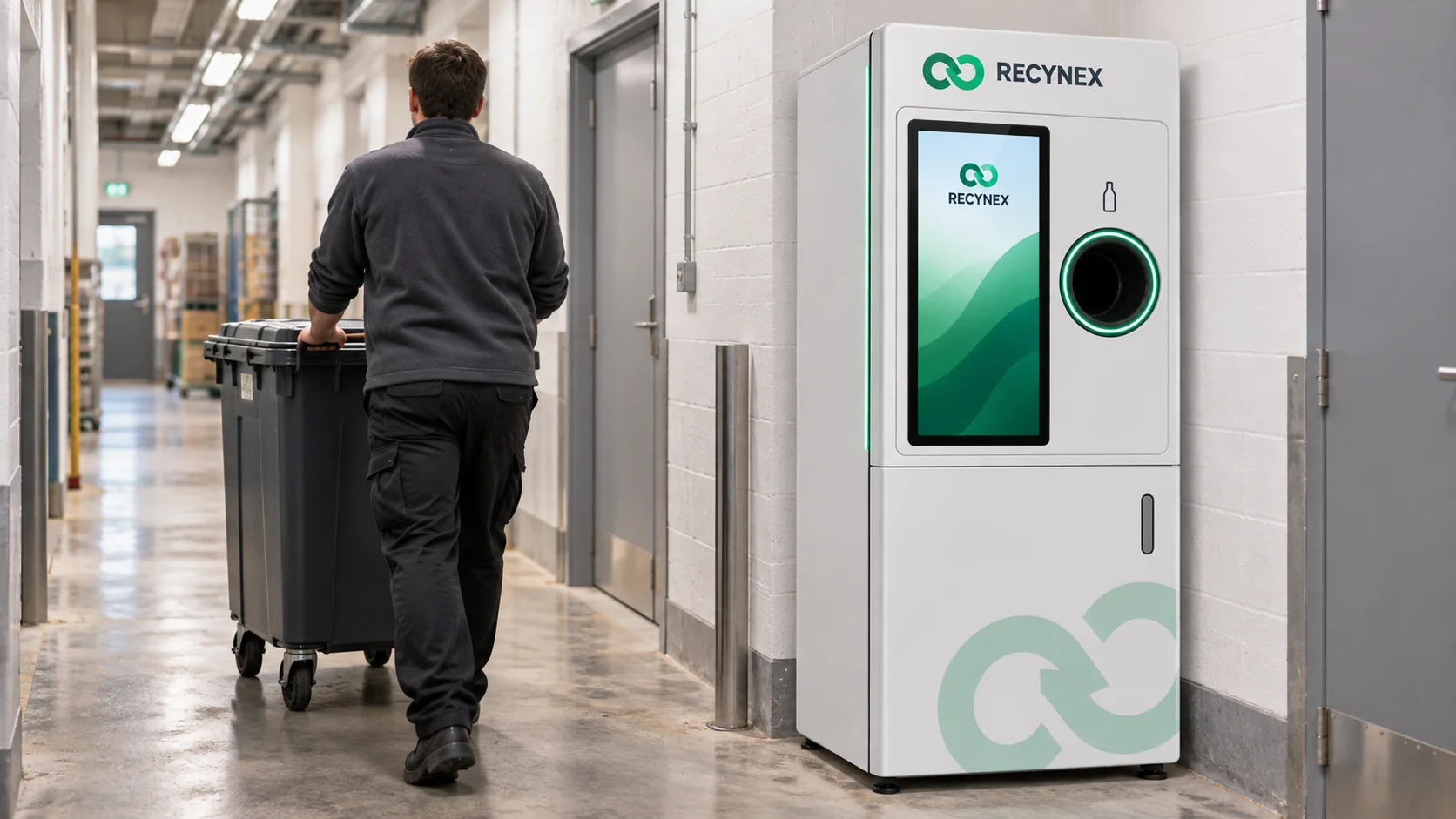
Check the approach as well as the cabinet. An obstructed queue, damaged sign or misplaced collection bag can make the point effectively unavailable without producing a device fault. Keep the record simple enough for a busy shift: a time, a station, what was observed, what action was taken and who will follow up. A ticked box with no route for an exception is less useful than a short note with an owner.
For every alert class, state who receives it, who can attend the site, when the point should be marked unavailable and who decides it can reopen. A site with no overnight staff needs a different response than a staffed store. If RECYNEX Cloud is included, define alert ownership and task closure in its project configuration; software cannot repair a physical blockage by itself.
Choose a realistic scenario during commissioning, such as storage reaching the agreed service threshold. Follow it from detection to visitor message, alert delivery, staff acknowledgement, container exchange and return-to-service check. If the person who receives the alert cannot reach the service door during their shift, the workflow is unfinished. Repeat the exercise for an unavailable intake and for a communications gap where the last known status may be stale.
The record should preserve both the initial event and the action that closed it. Do not overwrite an alert just because a device comes back online. A later reviewer needs to know whether the fault cleared itself, an operator intervened or the reported state was wrong. This matters when deciding whether to change training, site layout or the technical configuration.
Compare event logs with collection and service records. Repeated fullness may call for a different collection interval or storage plan. Repeated rejection may point to signage or packaging rules, not a hardware fault. Keep corrective actions tied to a date and owner so that the next shift does not restart the same investigation.
After the first operating period, compare the planned checks and service visits with actual incidents. Were staff frequently asked to do something outside their training? Did collection tasks arrive when the site was closed? Were spare parts or access permissions missing? Update the responsibility matrix and training material together. Keep the approved supplier schedule intact unless the parties responsible for the configuration formally revise it.
For multi-site programmes, do not assume one site’s rhythm applies everywhere. Keep common incident names and closure evidence, but record each location’s hours, access route and collection partner. This lets central operations compare like with like while giving the person on site an instruction they can actually follow.
The operator training guide covers role handover; service scope explains project support boundaries. Send your opening hours, packaging stream and current facilities process when you request a maintenance plan.
Estimate return-point collection intervals from real container mix, peak demand, storage rules and route ownership rather than a generic machine capacity.
Read moreA planning checklist covering the user approach, service clearance, power, network and collection handover.
Reviewed Read morePlan a supermarket return point around peak queues, store circulation, accepted containers and back-of-house collection rather than a headline throughput figure.
Read moreShare the location, container stream, operating team and systems already in place.