
Practical guide
Deposit Return vs Recycling Reward Programmes
Understand the different rules, evidence and reconciliation needs behind a deposit refund, a brand-funded reward and a return point with no incentive.
Read morePrepare site staff for the visitor journey, collection, cleaning and escalation.
Prepare site staff for the visitor journey, collection, cleaning and escalation.
Train with the approved packaging list, selected cabinet and installed software roles. Walk through an accepted container and several rejected cases. Staff should know which message a visitor sees.
Show the safe inspection and cleaning routine, collection trigger and material handover record. Assign named roles and a backup. Keep maintenance restricted to trained personnel for the selected equipment.
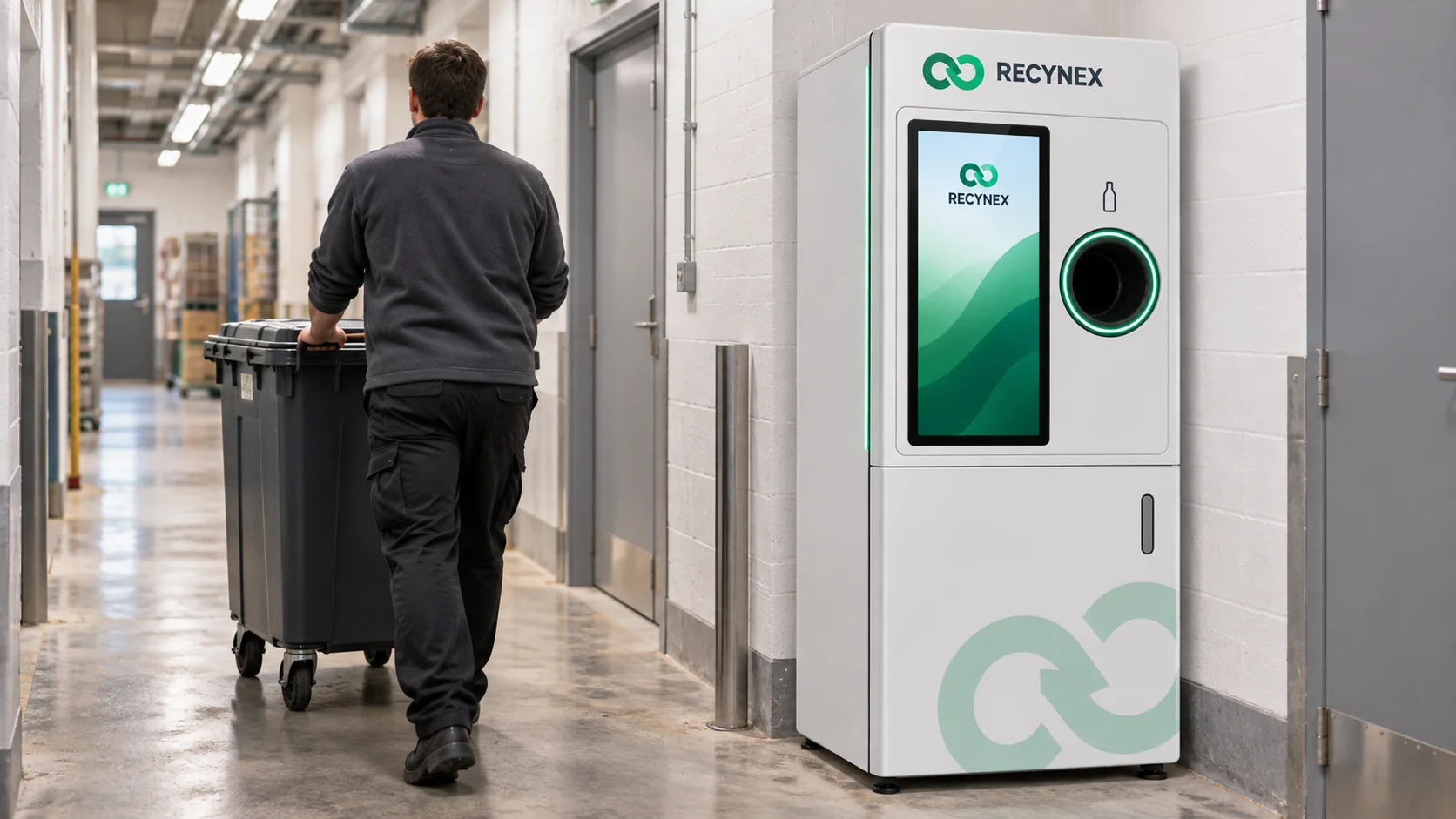
Deliver concise instructions, contact routes, a revision date and a place to record issues. Review the first weeks of questions and update guidance when the operating facts change.
Ask a trainee to demonstrate a normal return, explain a rejected item, complete a safe collection and locate the fault escalation path. Record which configuration and software role they were trained on. If shifts rotate, name a backup and a process for training replacements. A signed attendance sheet alone does not show that a full station will be handled correctly.
Visitors usually ask staff why a familiar-looking container was rejected or why a reward has not appeared. Give the operator a concise answer based on the approved packaging list and programme terms, plus a route for questions they cannot resolve. Staff should not guess that a brand logo makes a package eligible or promise a benefit that another system controls. Rehearse an interruption while a visitor is present so the team can close the point clearly and without improvising a technical explanation.
An operator may learn the machine on Tuesday and first face a full container on Saturday. Put the opening check, collection trigger, cleaning boundary and incident contact where every shift can find them. Include a short record of unresolved issues from the previous shift. If a temporary worker or contractor performs collection, confirm that their access, equipment and training match the task they are expected to perform.
After the first weeks of operation, ask what staff handled without logging and which instructions they found hard to use. Update the guide with the installed configuration’s actual behaviour. Keep older versions available so a later incident can be understood against the instructions in force at the time.
Share the intended operator roles and service hours when you plan training with RECYNEX. The collection handover guide can become the practical exercise for the site team.
Understand the different rules, evidence and reconciliation needs behind a deposit refund, a brand-funded reward and a return point with no incentive.
Read moreCompare refillable bottle, intact-glass and cullet routes, then define breakage controls, eligible formats and staff handover for a glass return point.
Read moreTurn one validated return point into a repeatable network plan for equipment, collection, software and service.
Reviewed Read moreShare the location, container stream, operating team and systems already in place.