Practical guide
How to verify an RVM acceptance list update
Roll out new packaging rules in stages and track which reverse vending machines applied the new list and passed a return check.
Read moreTrack when a reverse vending machine can accept bottles and cans separately, with a worked example and a simple shift log.
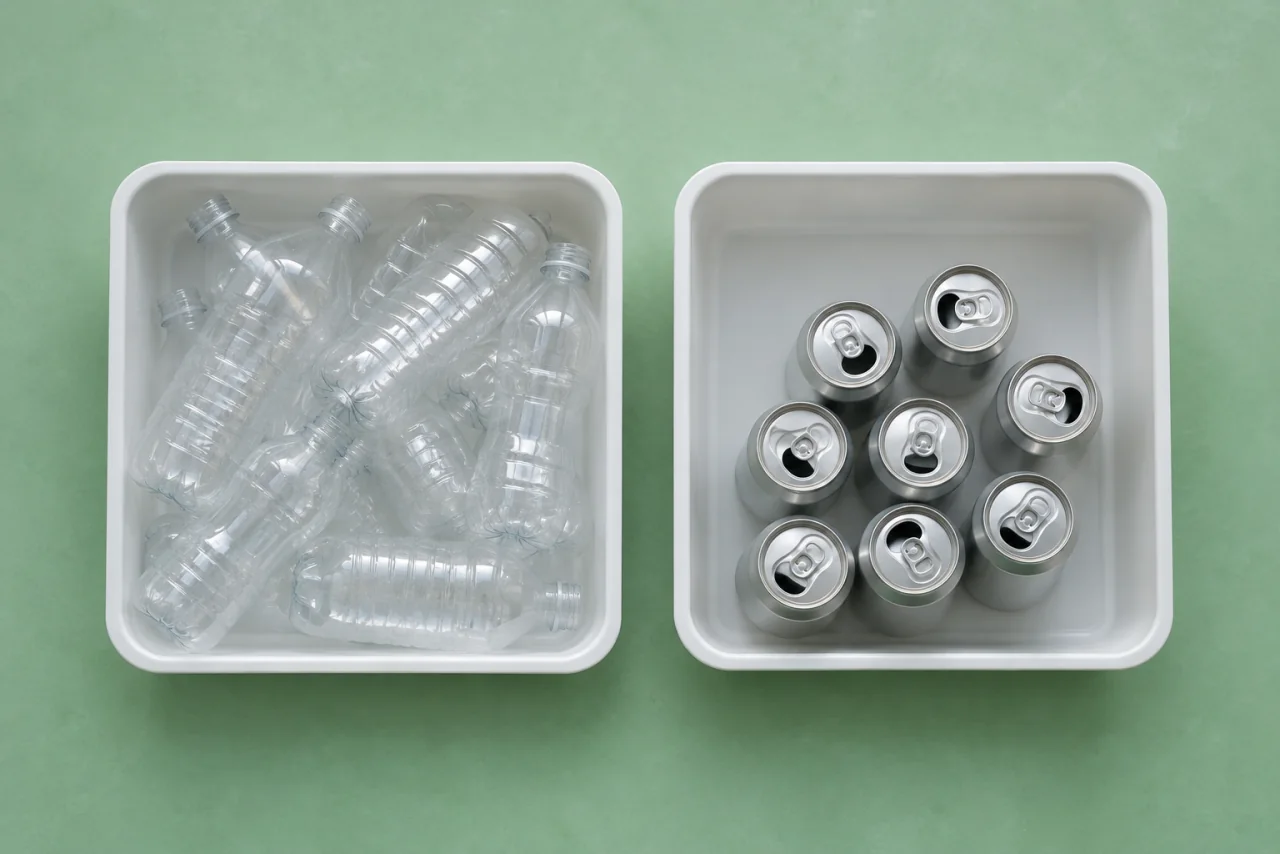
Measure availability for each material stream by dividing its usable minutes by its scheduled service minutes. If a reverse vending machine (RVM) still takes cans while bottle returns are suspended, the two streams have different availability. Recording both makes it easier to see which visitors need another return option and which interruption staff should investigate.
Start with the streams promised at that site, such as eligible PET bottles and aluminium cans. Some RVM configurations separate containers into different storage areas. Ask the installer what happens in the selected configuration when a bin fills, when it is removed, and when the machine enters service mode. One configuration may suspend a single stream, while another may pause the entire machine.
Record each change with the machine ID, stream, start time, reason, and restoration time. Distinguish a packaging rejection from a suspended stream. An ineligible bottle rejected during normal operation does not make the bottle stream unavailable. Record uncertainty when there is a gap between the last confirmed return and the first confirmed interruption. If you report a percentage while status is unknown, publish the unknown minutes alongside it and document how you handled them.
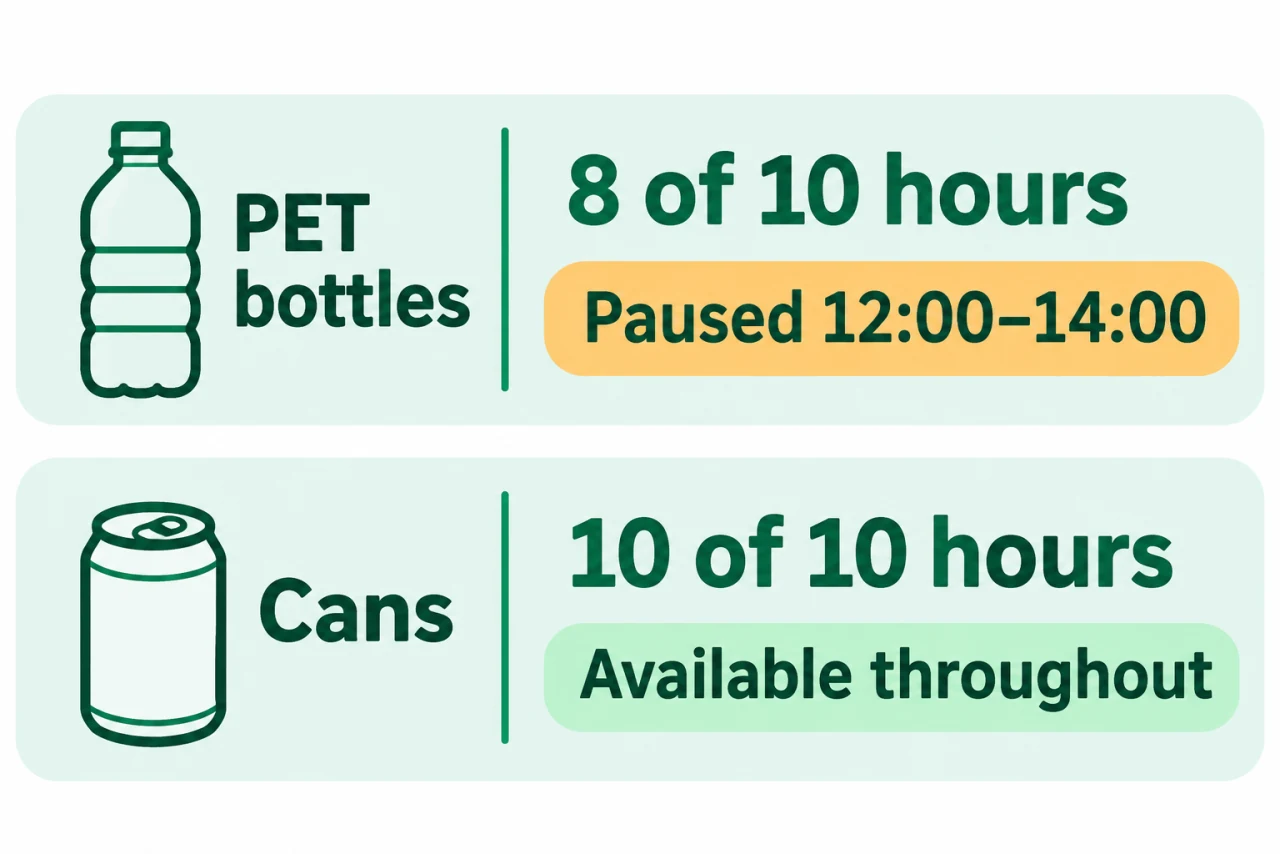
In this example, the site offers both streams from 09:00 to 19:00. Bottle returns are suspended from noon to 14:00, and cans stay available throughout. The PET stream is available for 480 of 600 minutes, or 80%. Cans are available for 600 of 600 minutes, or 100%. Both streams are available together for 80% of the day. A site-wide measure based on whether any stream is available would show 100%, so label that measure clearly if you report it.
Use the RVM pilot evaluation guide for the wider service review, and the collection frequency guide if repeated full bins point to a pickup schedule that needs adjustment.
Roll out new packaging rules in stages and track which reverse vending machines applied the new list and passed a return check.
Read moreCompare the time left before a reverse vending machine stops accepting containers with the time staff need to respond and exchange the bin.
Read moreUse an operator checklist to confirm machine readiness and reconcile any return session interrupted by a power outage.
Read moreTell us what you need to return and where. We can help define the remaining details.
May we use Google Analytics to understand which pages help visitors? Your choice does not affect enquiries. You can change it at any time using Analytics preferences. Privacy notice