Practical guide
Plan a multi-site return rollout without multiplying exceptions
Turn one validated return point into a repeatable network plan for equipment, collection, software and service.
Reviewed Read moreMeasure return attempts, machine availability and collection handovers before deciding whether to expand an RVM pilot.
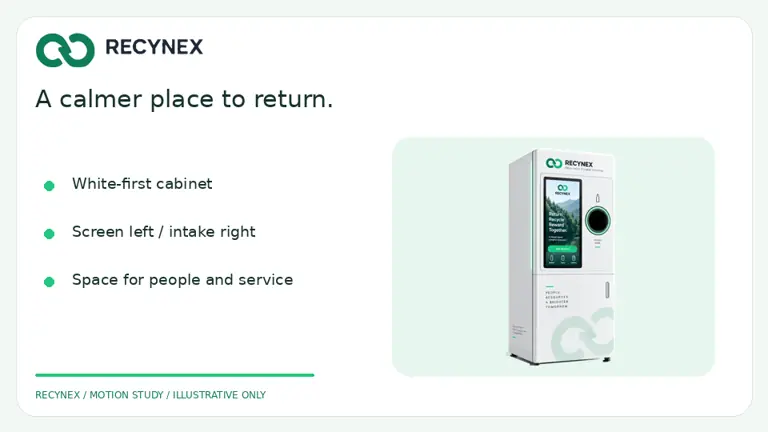
A reverse vending machine (RVM) pilot tests whether people can return eligible containers and whether the site can keep the return point working and hand collected material to its receiver. Before expanding, review three things together: how many return attempts succeeded, how much of the scheduled service time the machine was usable, and whether the collected material can be traced through handover.
For example, 90 accepted items in 120 observed attempts gives a 75% acceptance rate for that sample. That number alone does not show whether the other attempts involved ineligible packaging, damaged labels, repeated attempts or a machine issue. Log the reason when it is known and retain an “unknown” category. These figures are illustrative; set the pilot’s decision criteria before collecting data.
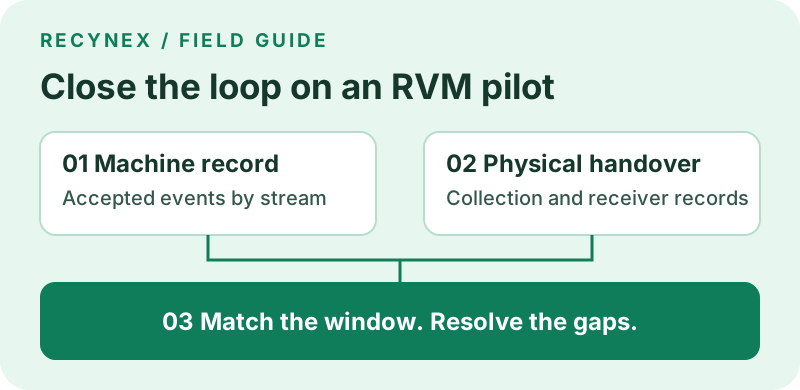
Start with one machine, one material stream and one collection window. Record whether the bin already held material at the start and whether any remained at the end. Link the collection record to the receiver’s receipt when available. If the windows or units differ, flag the records as incomparable until the operator can account for the difference.
Keep machine acceptance separate from downstream recovery. An accepted event describes what happened at the machine. A handover record describes what was transferred; a claim about what was ultimately recycled needs evidence from downstream.
Review the results with the site operator and collection partner. Give each recurring rejection, interruption or handover gap an owner and a follow-up date. If a fix changes the accepted packaging list, signage or collection schedule, repeat the same observation window where practical and compare results using the same definitions. Expand when the evidence meets the agreed criteria and the receiving site can support the same operating routine.
Use the RVM site survey guide to plan the location and collection route, and the guide to recognition and acceptance to define what counts as a confirmed machine event.
Turn one validated return point into a repeatable network plan for equipment, collection, software and service.
Reviewed Read morePlan a supermarket return point around peak queues, store circulation, accepted containers and back-of-house collection rather than a headline throughput figure.
Read moreEstimate return-point collection intervals from real container mix, peak demand, storage rules and route ownership rather than a generic machine capacity.
Read moreTell us what you need to return and where. We can help define the remaining details.
May we use Google Analytics to understand which pages help visitors? Your choice does not affect enquiries. You can change it at any time using Analytics preferences. Privacy notice