Practical guide
Reverse Vending Machines for Supermarkets
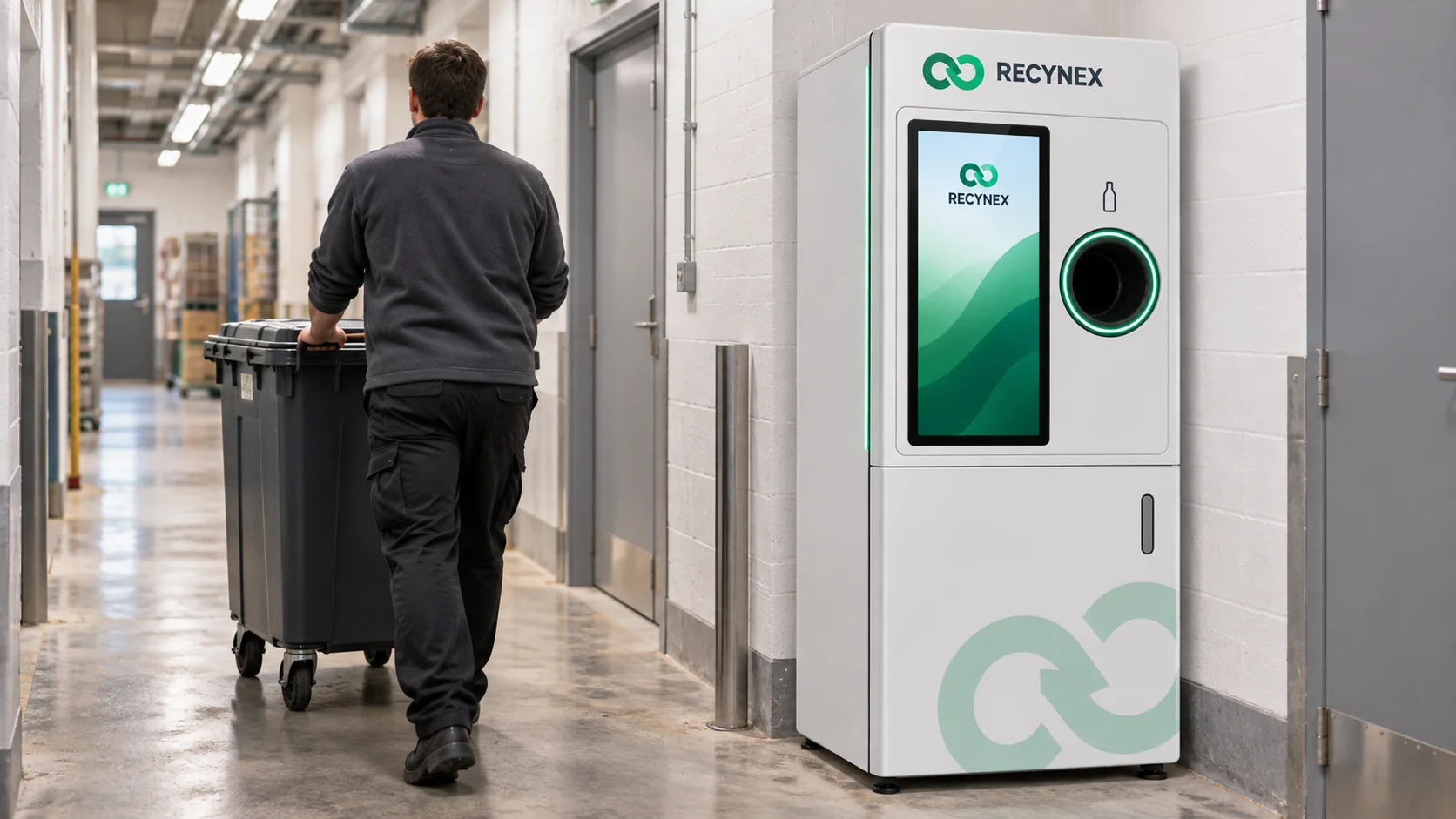
Plan a supermarket return point around peak queues, store circulation, accepted containers and back-of-house collection rather than a headline throughput figure.
Read moreTurn one validated return point into a repeatable network plan for equipment, collection, software and service.

A successful first location does not prove that the same cabinet belongs at every site. Floor space, packaging mix, opening hours and collection access change across a network. The rollout plan needs a common decision method and room for justified local differences.
For each candidate site, record the return stream, visitor peak, proposed position, service access, collector route and named owner. Group sites that truly share those conditions. A compact staffed store may start with Mini; a busy public point with a longer collection interval may need One or Max. Outdoor exposure and glass streams require separate qualification rather than a tick in a generic rollout spreadsheet.
| Gate | Evidence to keep | Decision owner |
|---|---|---|
| Packaging | Sample list, exclusions and version | Programme owner and equipment lead |
| Site | Measured position, utilities and service route | Facilities or landlord |
| Operation | Daily checks, collection and escalation | Local operator |
| Integration | Event contract, accounts and recovery tests | Both system owners |
| Acceptance | Trial results and handover record | Customer project lead |
Choose a site representative of the harder locations, not only the easiest one. Test approved and rejected containers, peak use, collection, cleaning, faults and offline behavior. Record the configuration and changes made during the pilot. The exit decision should say whether to repeat the configuration, change it for a site group or stop until a constraint is resolved.
A multi-site operator needs to know which station needs attention, who is acting and when a collection was completed. Cloud can structure those tasks and records; Connect can pass agreed events to an existing control platform. Define user roles, event age, offline recovery and report ownership before a dashboard becomes the centre of the rollout.
Create a site pack with approved drawings, packaging rules, installation checks, operator instructions, acceptance records and the escalation route. Review changes against the pilot baseline rather than silently editing each location. Send your candidate-site list and existing system map when you plan a network discussion. The site survey worksheet supplies a consistent first pass.
Give the rollout team permission to pause a location with unresolved access, utilities or collection ownership. An installation date is not evidence that the site can operate. A short gate review before delivery can save a much longer period of avoidable downtime after opening. Record whether the issue is local, such as a locked service corridor, or common to the chosen configuration, such as a packaging rule that fails at several pilot sites.
After each wave, compare site-specific exceptions with the approved pack. If every store needs the same workaround, revise the standard. If only one does, document its local variation and the person who owns it. This keeps the programme repeatable without pretending that all buildings and operators are the same.
Plan a supermarket return point around peak queues, store circulation, accepted containers and back-of-house collection rather than a headline throughput figure.
Read moreDefine queueing, replay, deduplication and reconciliation before connecting return equipment to another system.
Reviewed Read moreSet sample, site, event and operator acceptance criteria before committing to a wider equipment order.
Reviewed Read moreShare the location, container stream, operating team and systems already in place.