Practical guide
Measure a brand return programme without overstating impact
Separate participation, verified equipment events, material handover and downstream outcomes in a brand programme report.
Reviewed Read moreA packaging portfolio is not an equipment compatibility list. Separate formats, residues and downstream requirements.
Independent reading of public company information. This is not a customer case study, endorsement or partnership announcement.
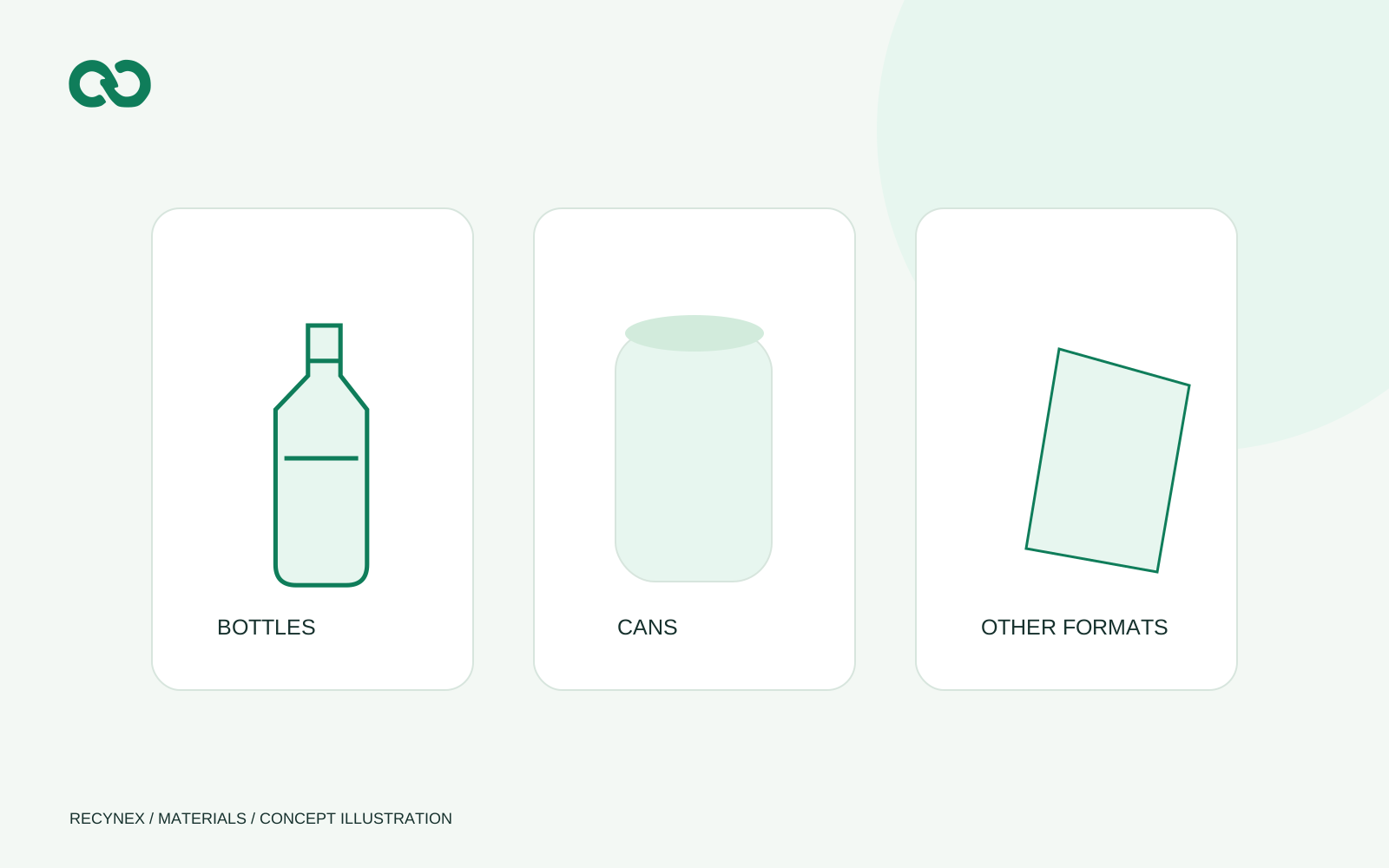
Unilever discusses rigid and flexible packaging separately in its plastics programme, alongside recycled content, reuse and collection infrastructure. The breadth of that portfolio is important when reading a high-level packaging ambition.
A proposed household-packaging project needs its own qualification work. Review closures, pumps, contamination and any cleaning expectations with the material receiver. Do not invite users to insert unqualified household containers into a drink-container RVM merely because both look like plastic.
The right answer may be a separate collection point rather than an extra software toggle. Compare a controlled take-back desk, a dedicated container and a qualified machine route. Assign a handling procedure and material owner to each option. These are proposed design choices, not a claim that RECYNEX accepts all the formats in the company’s portfolio.
Keep a versioned format list, an explicit exclusion list, staff guidance and downstream acceptance criteria. Publish only the formats the project has qualified. Clear exclusions give participants a more useful answer than a broad promise that every package can be returned.
A rigid bottle with a pump, a flexible pouch and a beverage container can all be described as plastic while demanding different handling. For a proposed project, compare a staffed take-back point, a dedicated material bin and qualified machine intake against the downstream receiver’s requirements. The right user instruction may be ‘return this elsewhere’, not ‘the machine accepts plastic’.
If a proposed household-packaging scheme collects containers with residue, ask who will inspect, store and transport them. A pump or closure that must be removed can change the visitor instruction and the operator’s workload. Put those handling steps in the site trial. A simple material label does not show whether a front-of-house machine is the right tool for that stream.
The most useful pilot may therefore compare routes rather than cabinets. Test a qualified machine path only for formats that pass the physical and downstream review, while giving other formats a staffed or separate collection route. Record what visitors misunderstood and what staff had to correct. This is a practical way to define a narrow, honest programme without implying that every rigid or flexible package belongs in a beverage RVM.
This article interprets public company information, not an Unilever deployment. Map your packaging stream before discussing a site.
Separate participation, verified equipment events, material handover and downstream outcomes in a brand programme report.
Reviewed Read moreWhy a beverage return point should not be described as a universal packaging solution.
Reviewed Read moreA buyer's method for separating PET, cans, glass and exceptions before selecting intake equipment.
Reviewed Read moreShare the location, container stream, operating team and systems already in place.