
Practical guide
Reverse Vending Machine Maintenance Checklist
A practical daily, event-driven and service handover checklist for RVM operators, with clear ownership and records rather than assumed service intervals.
Read morePublic company context and a proposed event-operation checklist, not a customer announcement.
Independent reading of public company information. This is not a customer case study, endorsement or partnership announcement.
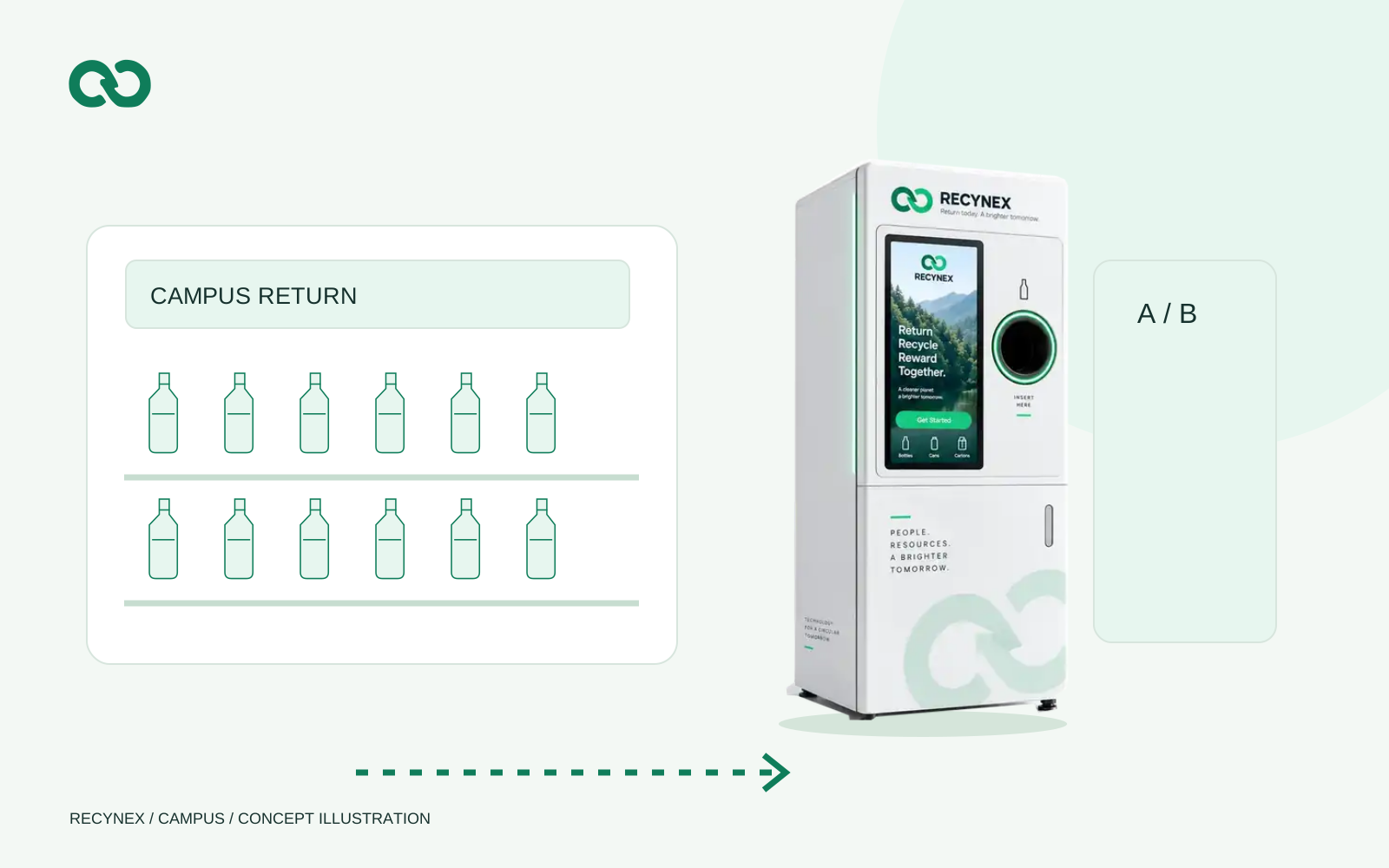
Ganten’s official company page identifies Jingtian as a packaged drinking-water business and describes conference and sports-event involvement. That context suggests event settings as a useful topic for return-point planning, but it does not establish a RECYNEX relationship.
An event return point should be reviewed against the actual circulation plan. Identify queue spillover, access for staff and what happens when the point is unavailable. Choose locations with the venue team rather than assuming a prominent entrance is automatically the best location.
Assign a collection owner for the whole event, including setup and teardown. Agree where full containers wait, how they are labelled and how the final handover is recorded. A temporary installation still needs an escalation contact and a documented shutdown procedure.
Use separate totals for accepted returns, collected material and confirmed downstream receipt. Do not extrapolate a recycling or carbon claim from attendance. Any future customer case should identify the actual project scope, evidence and permission to publish the name and imagery.
Estimate when visitors actually arrive and leave, then schedule staff and container exchanges around those waves. Position the return point so a queue does not block an entrance, and make the rejected-item path visible. Run a controlled sample test before the event; changing bottles or labels on site should trigger review rather than an untested promise.
Temporary programmes often plan opening well and closing poorly. Decide when the last return is accepted, who changes the visitor message, how remaining material is labelled and who confirms the final handover. If a station is removed before the receiver signs for the material, preserve a batch record that links the site to the receiving party. Event photographs and an accepted-item total do not establish where the containers went afterward.
For an event that moves between venues, keep a common packaging test and operating script, then survey each location’s access and collection route separately. The same model may sit in a hall one week and beside an exposed walkway the next. That change can affect shelter, utilities, queueing and staff coverage; it should not be treated as a simple transport job.
This is an application of public context, not a report of a Jingtian or Ganten installation. Plan an event or venue return point with the timetable, packaging samples and removal route.
A practical daily, event-driven and service handover checklist for RVM operators, with clear ownership and records rather than assumed service intervals.
Read moreAlign packaging rules, customer experience, reward accounting and campaign reporting.
Reviewed Read moreA reading of public packaging priorities, followed by a practical checklist for return-point projects.
Reviewed Read moreShare the location, container stream, operating team and systems already in place.