Practical guide
Reverse Vending Machine Tender Specification Guide
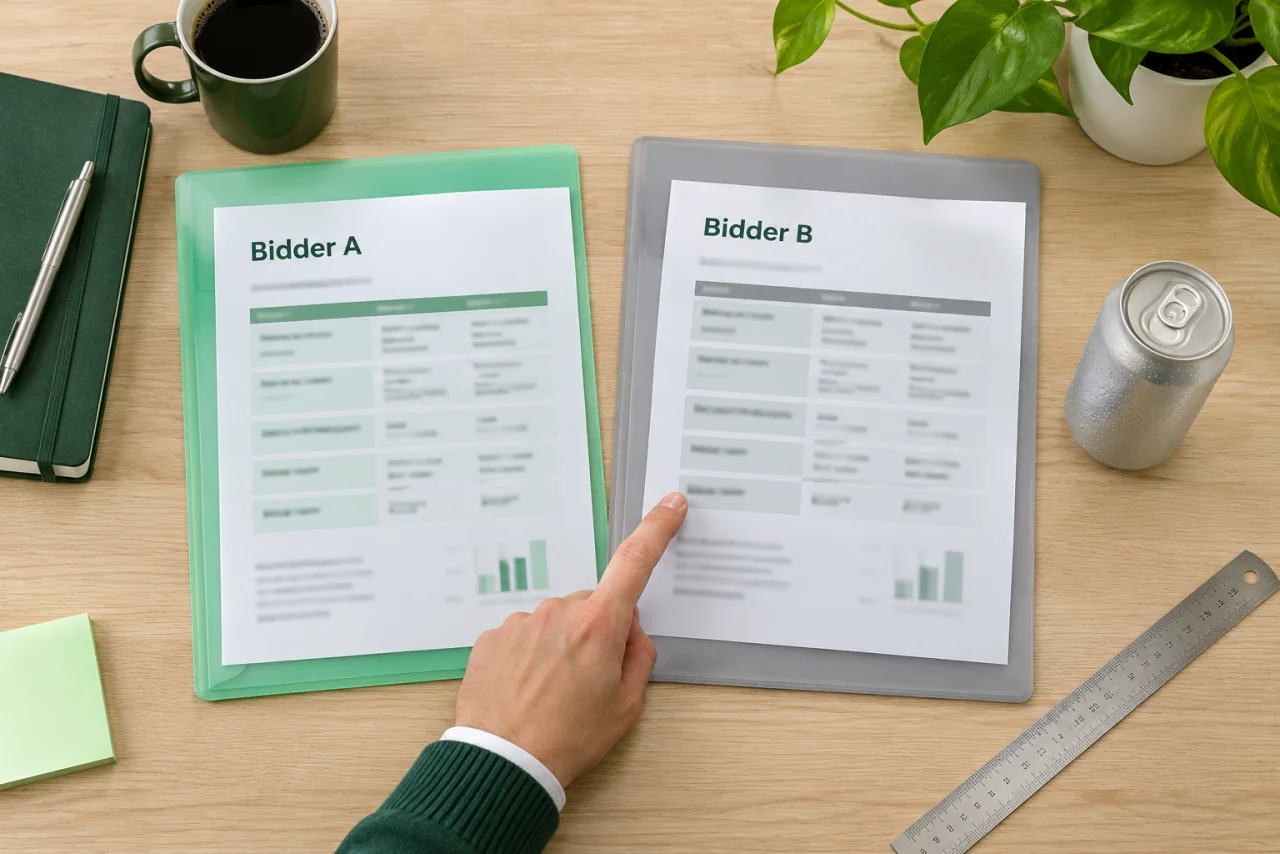
Build an RVM request for proposal that compares tested packaging, site fit, software, service, acceptance and commercial exclusions on the same basis.
Read moreCompare reverse vending machines using the same container batch and two timers, one for intake and one for the complete return session.
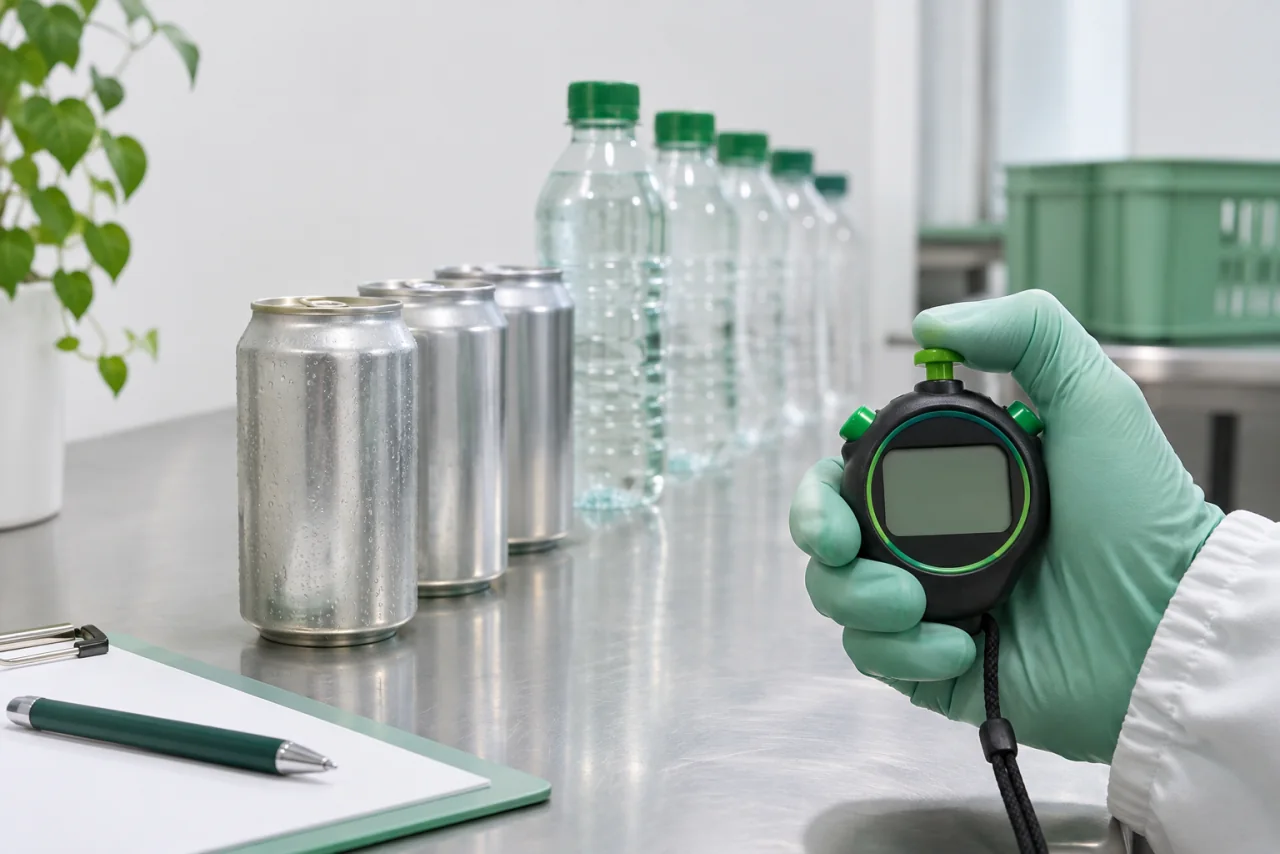
To compare reverse vending machine (RVM) throughput, test the same eligible container mix on each configuration. Time the intake window and the complete return session separately. Divide the number of accepted containers by the elapsed minutes for each measure and publish the timing boundaries with the result.
Choose batches that represent the intended site, including its typical material and size mix. Agree on batch size, eligible formats and container condition before testing. If one machine compacts the batch, prepare equivalent sets so each run starts with comparable containers. Record the configuration, starting bin fill, test operator and the configured receipt or confirmation step. Use each machine’s normal operating procedure. For example, single-feed and multi-feed systems have different loading methods, so apply the same test batch and timing rules while using the supported loading method for each.
Run the same conditions more than once. Switch the test order across repeats where practical to reduce the effect of operator practice. If two setups support different packaging, compare speed on the shared eligible formats and report format coverage separately. Use a separate challenge batch for planned rejection or recovery tests.
| Measure | Start | Stop |
|---|---|---|
| Intake window | The operator begins the first insertion or load | The machine indicates the final item outcome |
| Full session | The operator first interacts with the ready return point | The operator receives the configured confirmation or collects the receipt |
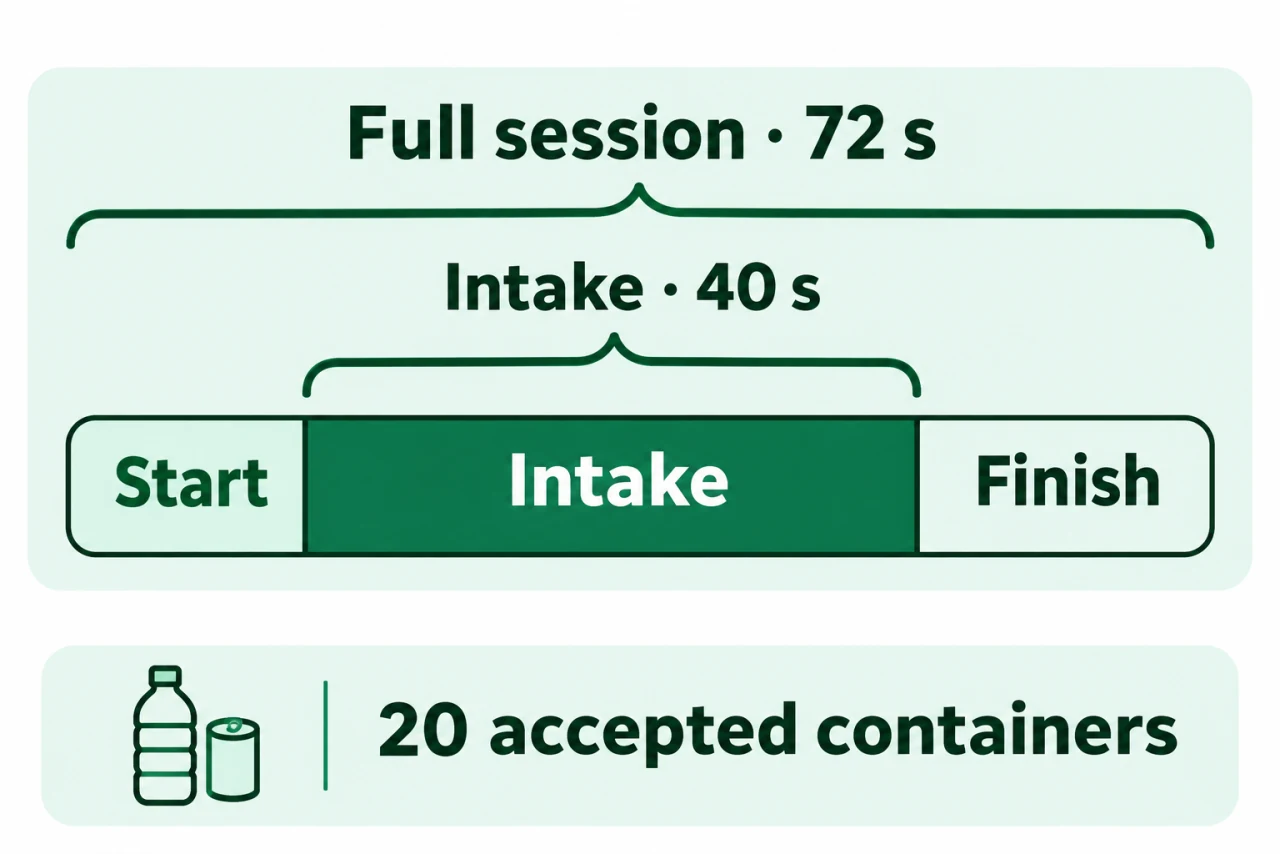
In this example, the RVM accepted 20 containers. The 40-second intake window gives 30 accepted containers per minute. The 72-second full session gives about 16.7 accepted containers per minute. Both describe the same illustrative run. The gap tells the project team how much time fell before and after intake. It gives them a reason to review the start and confirmation steps separately.
Record the number offered, accepted and rejected. Keep rejected items out of the accepted count, but keep time spent handling them within the measured window. If a session stops before confirmation, mark it incomplete and record the observed time and reason. Report complete and incomplete runs separately, including how often each outcome occurred. For completed runs, share the median and range with the batch mix and repeat count.
Use the test to compare the specified configurations under the agreed conditions. When planning a live site, add a peak-hour queue observation to measure arrivals and waiting time. The RVM pilot evaluation guide explains how to bring throughput evidence together with availability and collection records.
Build an RVM request for proposal that compares tested packaging, site fit, software, service, acceptance and commercial exclusions on the same basis.
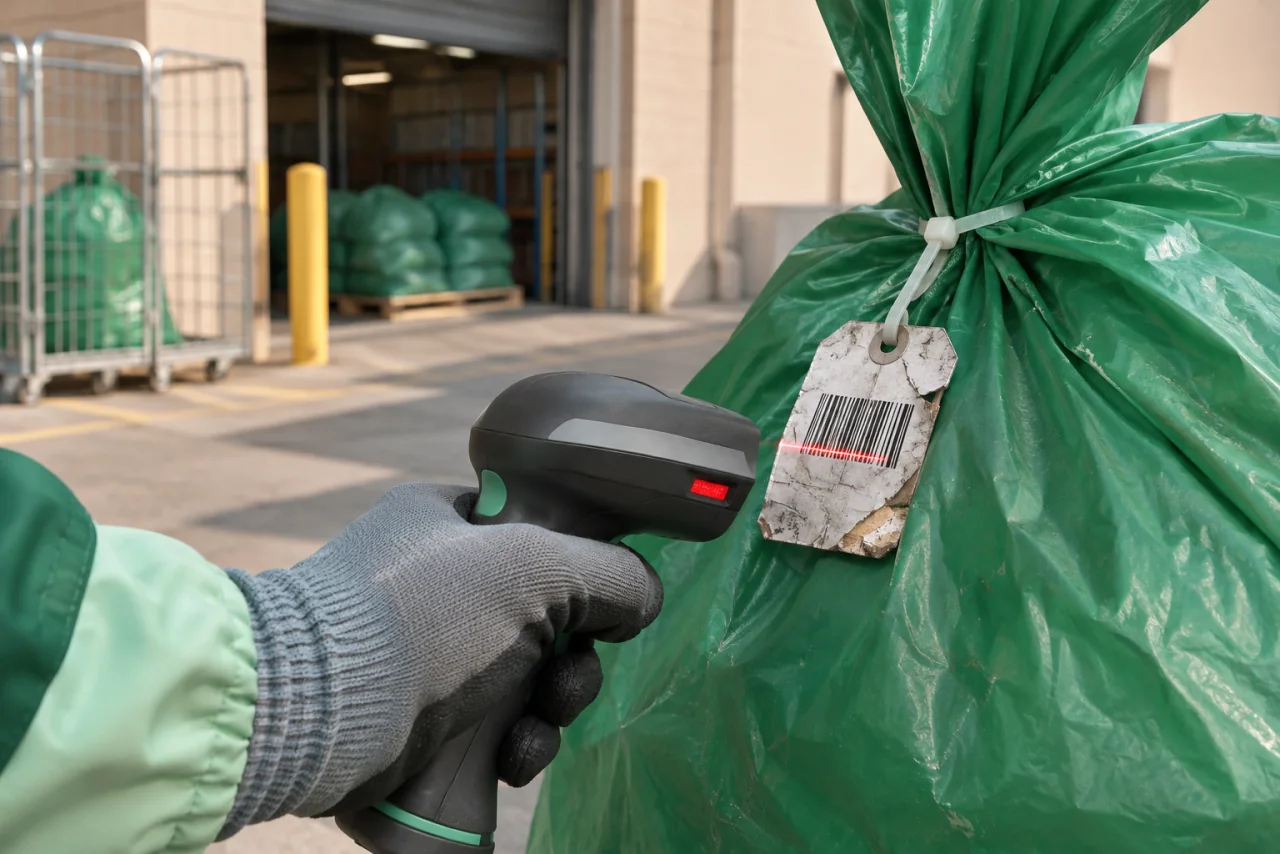
Read moreRecord which bags the collector actually took, preserve the original bag reference, and resolve failed scans against the collection receipt.
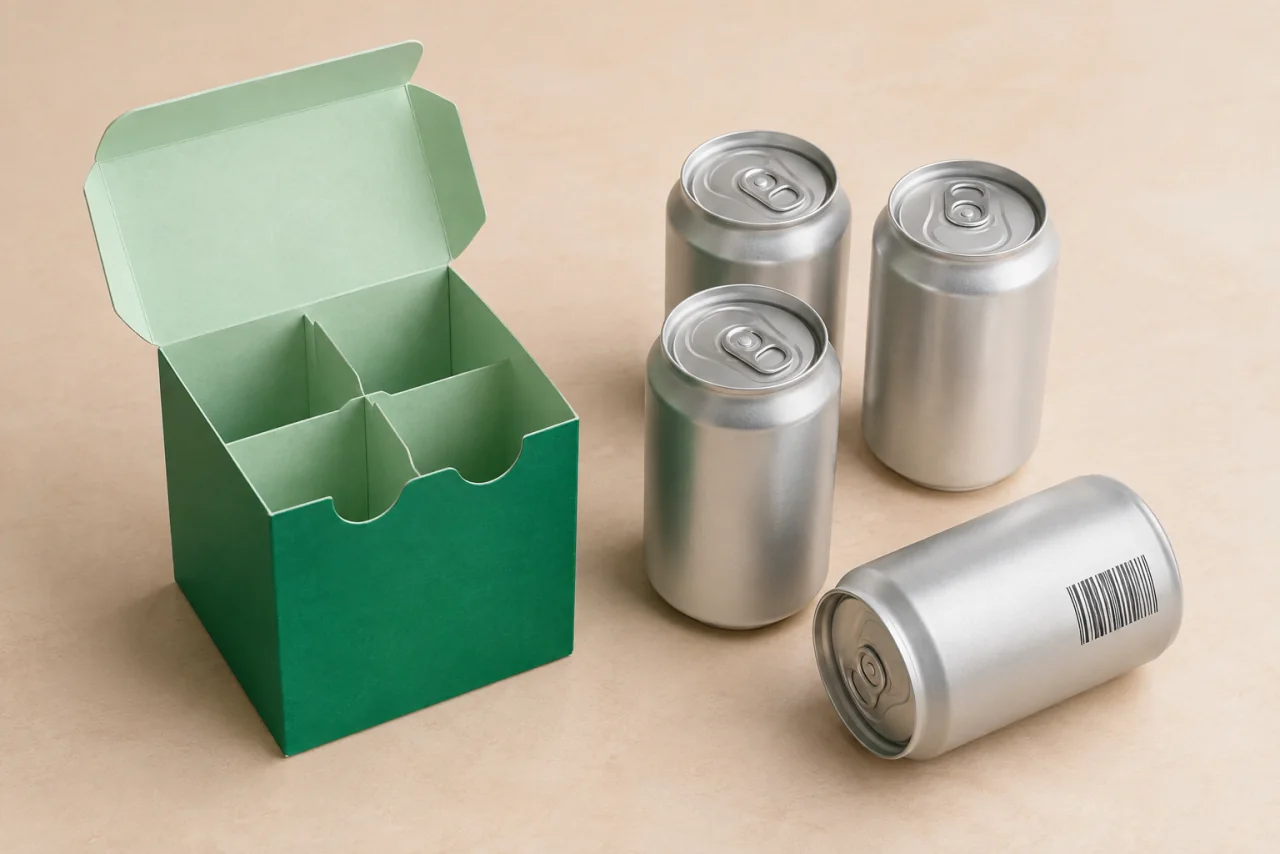
Read moreDistinguish the retail carton barcode from the code on each empty can or bottle, then validate the return against the programme record.
Read moreTell us what you need to return and where. We can help define the remaining details.
May we use Google Analytics to understand which pages help visitors? Your choice does not affect enquiries. You can change it at any time using Analytics preferences. Privacy notice