
SECTOR SOLUTION
Public return points people can understand and use.
Plan a public return point with clear packaging rules, accessible placement, maintenance ownership and a verifiable material handover.
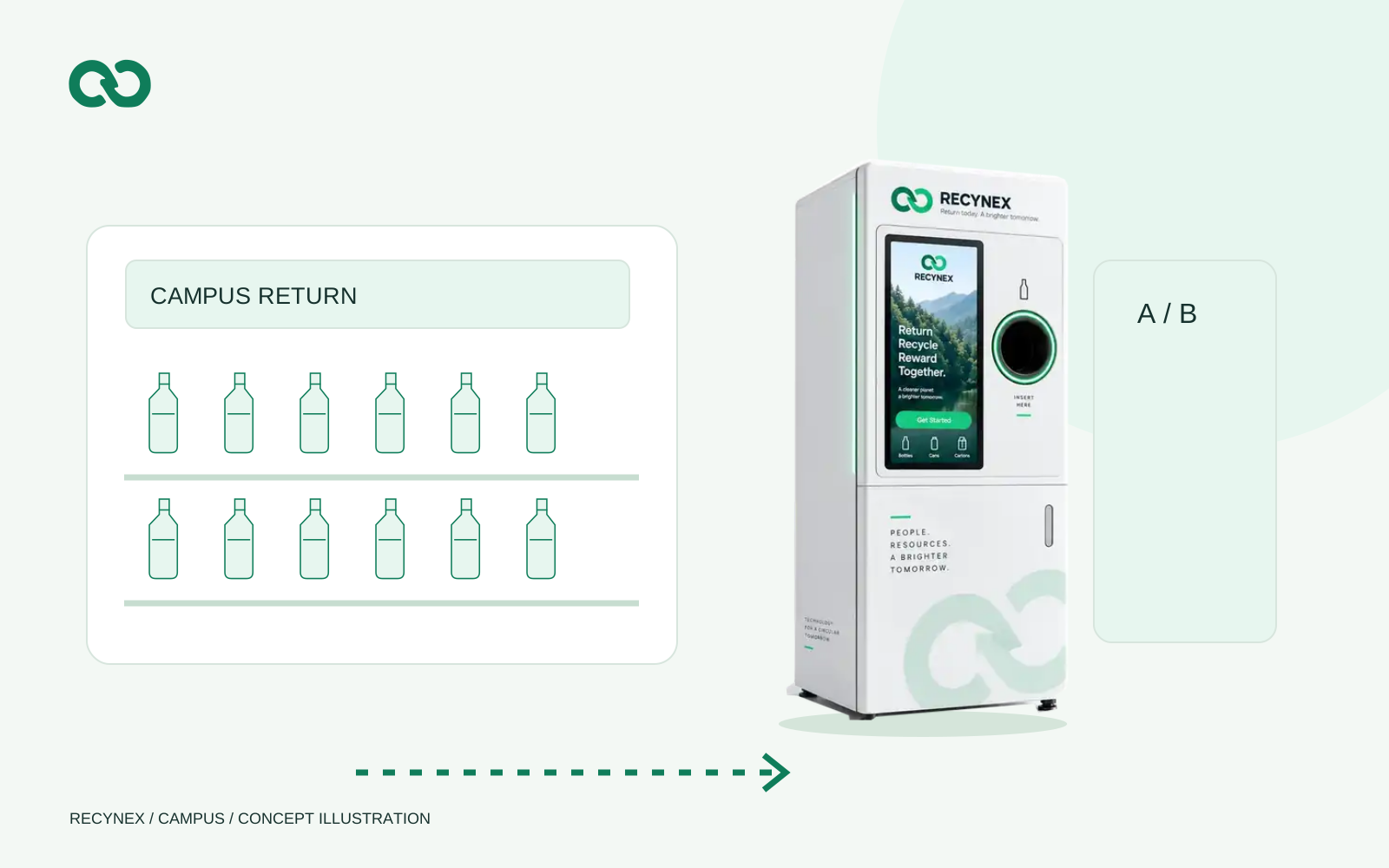
PROJECT WORKFLOW
Decisions to make before installation.
Place
Assess exposure, power, connectivity and vandalism risk.
Operate
Publish a simple eligible-packaging guide at the point of use.
Verify
Agree who responds to faults, removes material and reports outcomes.
A public return point should explain what it accepts and remain serviceable when the original project team is not on site. Clear rules, a named operator and a reliable material route matter as much as the location itself.
The decision at this site
Survey the approach for visibility, accessibility, lighting and nearby circulation. Record weather exposure, drainage, power, connectivity, security and the route a collector will use. Agree who can update the eligible-packaging list and who responds when the station is unavailable. Public instructions should explain rejection without implying that every familiar-looking package qualifies.
Equipment direction
An Outdoor configuration is relevant when the actual location has environmental exposure, but the shelter, electrical protection and verified rating must be specified for that position. One may suit a conditioned community building. Compare the two against the site and service plan rather than treating ‘public space’ as a single equipment category. Any glass stream requires separate handling and downstream approval.
Software and integration
Cloud can provide status and service tasks to the responsible operator. Connect can send agreed events to a municipal or community reporting system, with offline recovery defined where connectivity is weak. Count accepted returns, material handovers and downstream outcomes separately. Do not infer recycling rates or avoided emissions from the machine’s event count alone.
Service handover
Write down the maintenance owner, collection schedule, fault contact, cleaning routine and material recipient before launch. A public programme also needs a way to update on-site instructions when accepted formats change. Share a site plan, exposure details, packaging list and operator structure for the first review. Discuss a public-space project, plan a residential return point or use the integration checklist.
KEEP EXPLORING
Explore other site contexts
See how location and operating model change the project brief.
-
Retail & convenience
Plan bottle-and-can returns around store flow and collection access.
Explore context -
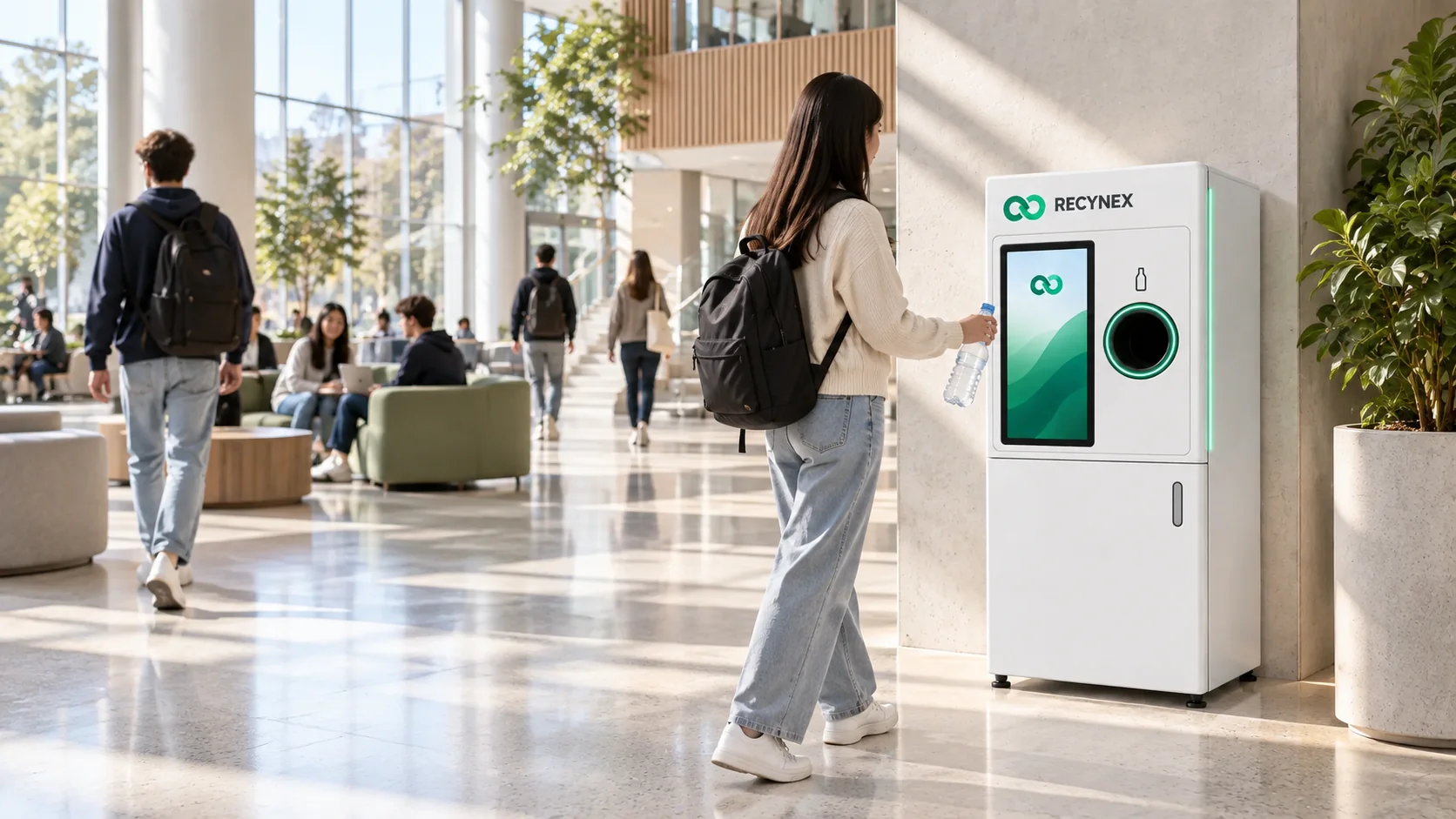
Campuses & workplaces
Connect everyday participation to facilities ownership and collection.
Explore context -
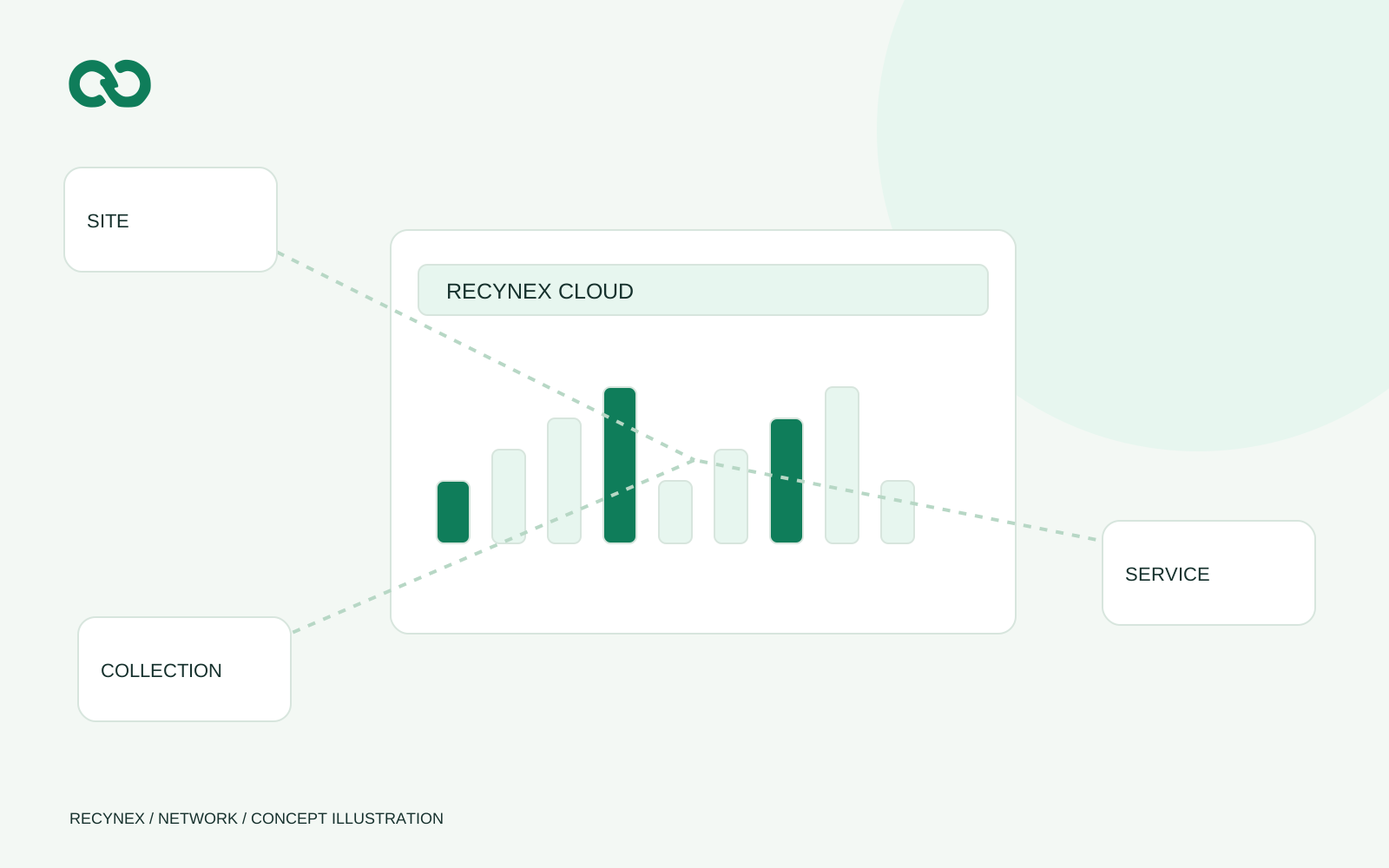
Brands & operators
Plan packaging rules, verified events and roles across sites.
Explore context
Turn your site brief into a configuration
Share the location, container stream, operating team and systems already in place.