Practical guide
Reverse Vending Machines for Universities
Plan a campus bottle-and-can return point around student journeys, catering packaging, term-time peaks, facilities ownership and accountable collection.
Read moreAssess weather exposure, utilities, user approach, security and service access before specifying an outdoor bottle and can return point.
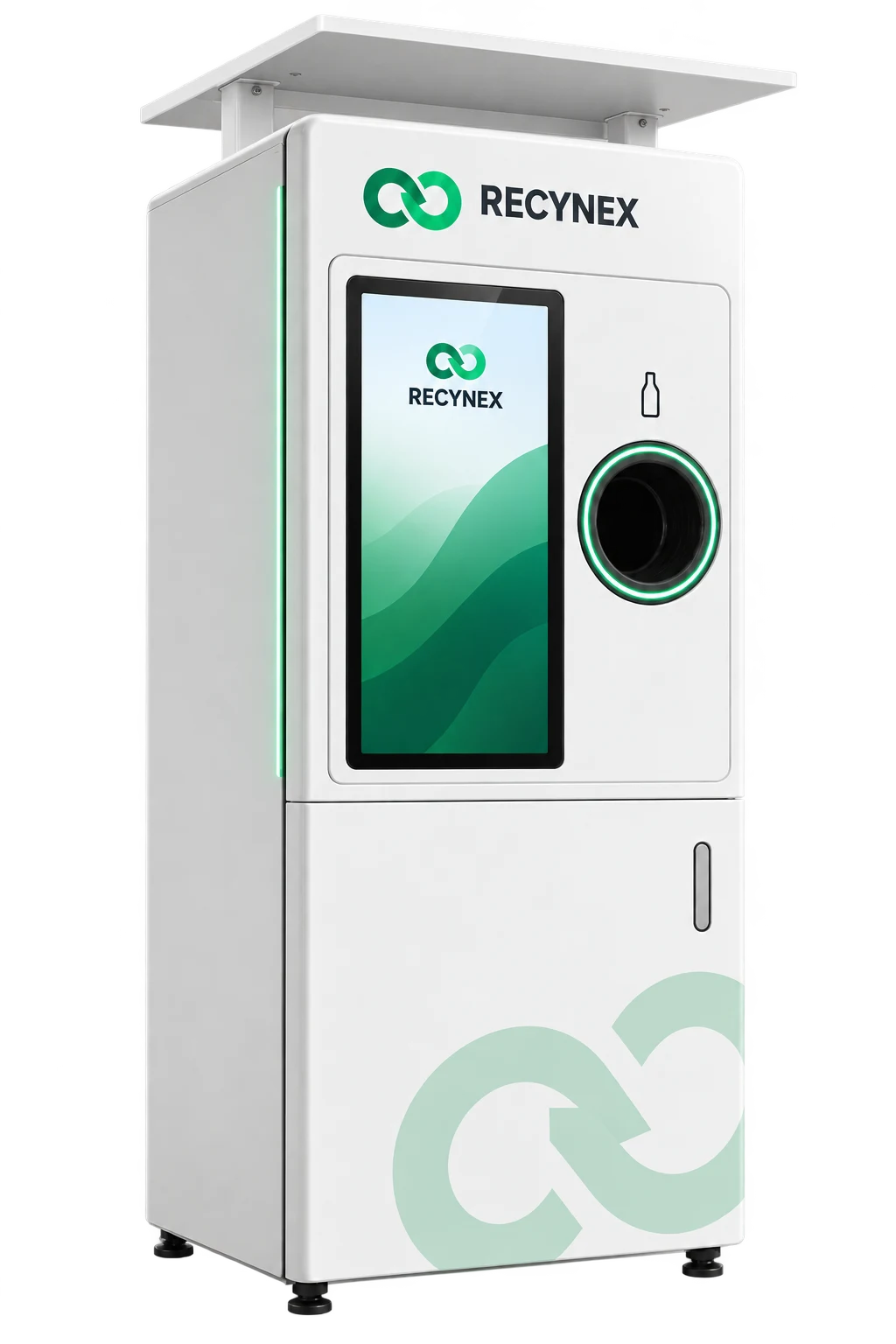
“Outdoor” is a site condition, not a blanket machine rating. An exposed return point needs a configuration reviewed against its actual rain, sunlight, temperature, cleaning and public-access conditions. Begin with a site assessment before promising year-round operation.
Photograph the proposed spot at different times of day. Note direct rain and spray, pooling water, wind-driven debris, sun on the screen, nearby drainage and the surface below the unit. Check whether a canopy changes the exposure and whether the site operator can maintain it. Ask for the environmental limits and installation requirements of the proposed configuration in writing; do not transfer a rating from another model.
A photograph taken on a dry day is only a starting point. Speak with the people who clean or maintain the site about where water collects after heavy rain and how the area is washed. Check whether a nearby door, vehicle route or landscape irrigation changes the exposure. Record the planned mounting surface and who can approve electrical and civil work. These observations belong beside the supplier’s configuration drawing.
An outdoor site may be reachable outside staffed hours. Decide how users find the point, read instructions after dark, approach it with a bag of containers and leave after a rejection. Keep an accessible route and waiting area in the site review. Where a programme gives an incentive, specify what the visitor sees during an outage and how an accepted event is protected from duplicate credit.
| Site risk | Question for the project brief |
|---|---|
| Weather and drainage | What can reach the cabinet, intake and service opening? |
| Power and connectivity | Who supplies and monitors them, and what happens during an outage? |
| Unstaffed access | Who checks fullness, misuse and damage outside opening hours? |
| Collection route | Can an operator safely open and remove material in the same conditions? |
| Signage and lighting | Can the eligible-packaging and rejection instructions be read at the site? |
The power connection, protective enclosure, network path and drainage are interdependent. A sheltered cabinet may still have an exposed cable route or an inaccessible isolator. Ask the installer and site owner to mark who supplies each element, how it is inspected and what happens if it fails. If a mobile connection is proposed, test it at the exact position during the intended operating hours. Do not assume the signal seen on a phone in another part of the site proves that the station will communicate reliably.
For a network interruption, decide whether the configured equipment may continue accepting returns, whether it must stop and how delayed events will be reconciled. Those are project decisions requiring a test, especially when an incentive is attached. The offline event recovery guide describes the data questions; the equipment proposal must state the actual behaviour of the selected installation.
Assign an owner for inspections, cleaning, incident reporting and material collection. Define which alert reaches which person and what the visitor should do if the station is unavailable. If the point is part of a network, agree how its operating hours and exceptions appear in RECYNEX Cloud. A camera or sensor alert does not replace a physical inspection plan.
RECYNEX Outdoor is the starting equipment direction for an exposed site. The accepted packaging list, protective measures and environmental specification still belong in the project proposal. Use the site survey worksheet, then request a site-specific review with photographs and the proposed operating hours.
An outdoor point can be easy for visitors to reach and difficult for an operator to service. Follow the route a person would take with a full collection container in rain or darkness. Look for steps, slippery surfaces, locked gates and places where a service door would block the public path. Set an access window and a fallback if the route is unsafe. A collection alert is not a workable plan if the operator cannot get to the cabinet when it arrives.
Before acceptance, test the user instructions in the actual lighting, check communications, rehearse an unavailable state and perform a supervised collection. Keep the approved environmental limits, maintenance roles and open issues with the site record. Revisit the assessment if a shelter, surrounding construction or operating hours change.
Plan a campus bottle-and-can return point around student journeys, catering packaging, term-time peaks, facilities ownership and accountable collection.
Read moreCompare compact and standard RECYNEX configurations around the actual visitor and service flow.
Reviewed Read moreA practical guide to planning a residential bottle-and-can return point around shared-space access, resident instructions, collection and building management.
Read moreShare the location, container stream, operating team and systems already in place.