Practical guide
Outdoor Reverse Vending Machine Site Planning
Assess weather exposure, utilities, user approach, security and service access before specifying an outdoor bottle and can return point.
Read morePlan a campus bottle-and-can return point around student journeys, catering packaging, term-time peaks, facilities ownership and accountable collection.
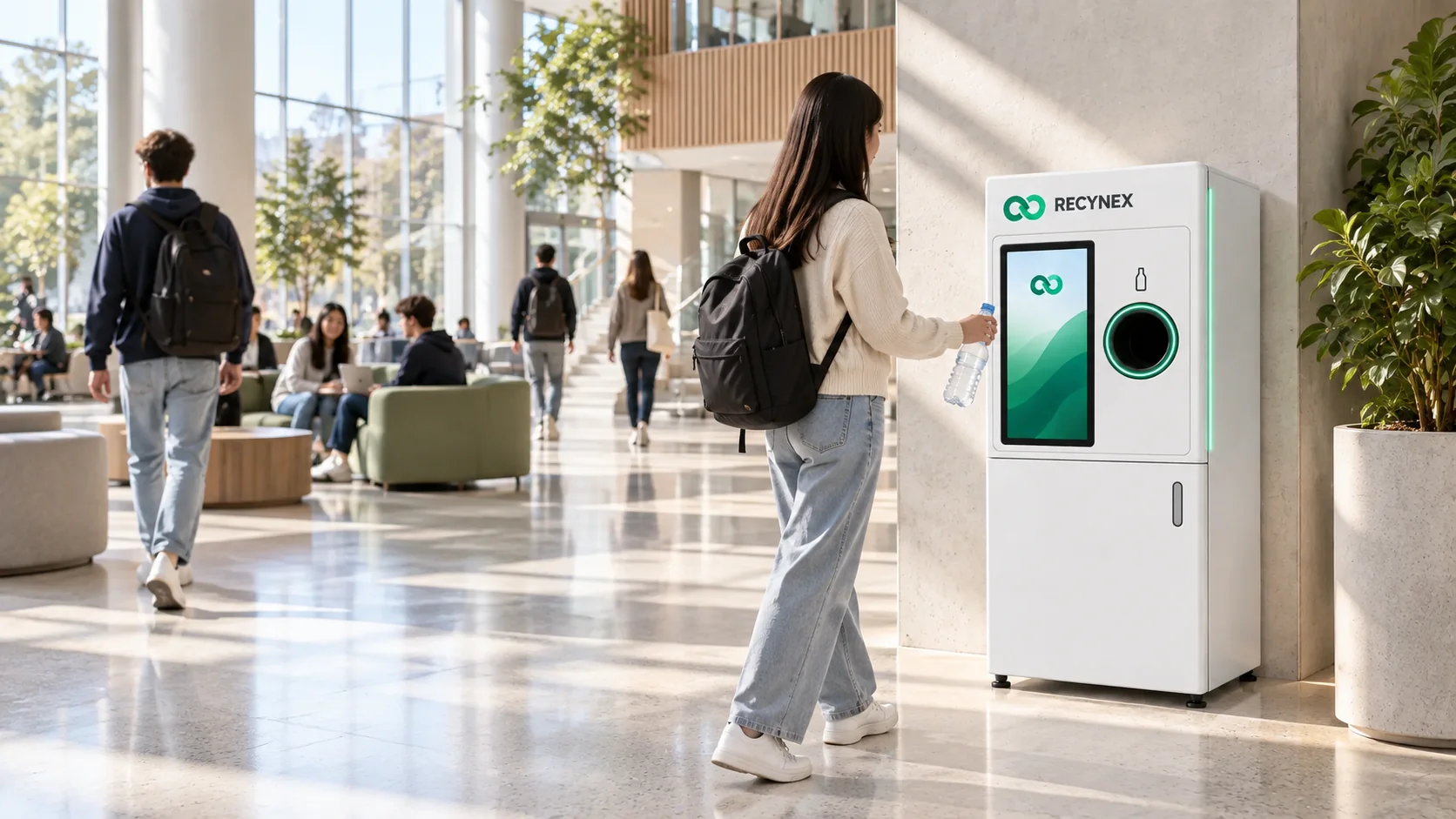
A university can have several plausible places for a bottle-and-can return point: a café exit, a library approach, a residence hall or a venue used for events. None is automatically the best first site. Students, visitors, catering staff and facilities teams use those spaces differently. A useful pilot starts by connecting the packaging people carry to the people who will keep the station open.
Walk the campus at the times drinks are bought and consumed. Which containers come from on-site catering? Which are brought from elsewhere? Are events supplied with a different format? Collect representative samples rather than assuming the campus can accept every bottle with a familiar shape. Ask the material receiver which formats it can take and how they must be separated.
The eligible list should be simple enough to explain at the point of return. If a deposit or incentive is proposed, the programme owner must define eligibility and accounting separately from the machine’s physical acceptance. The packaging-stream guide helps produce a testable list.
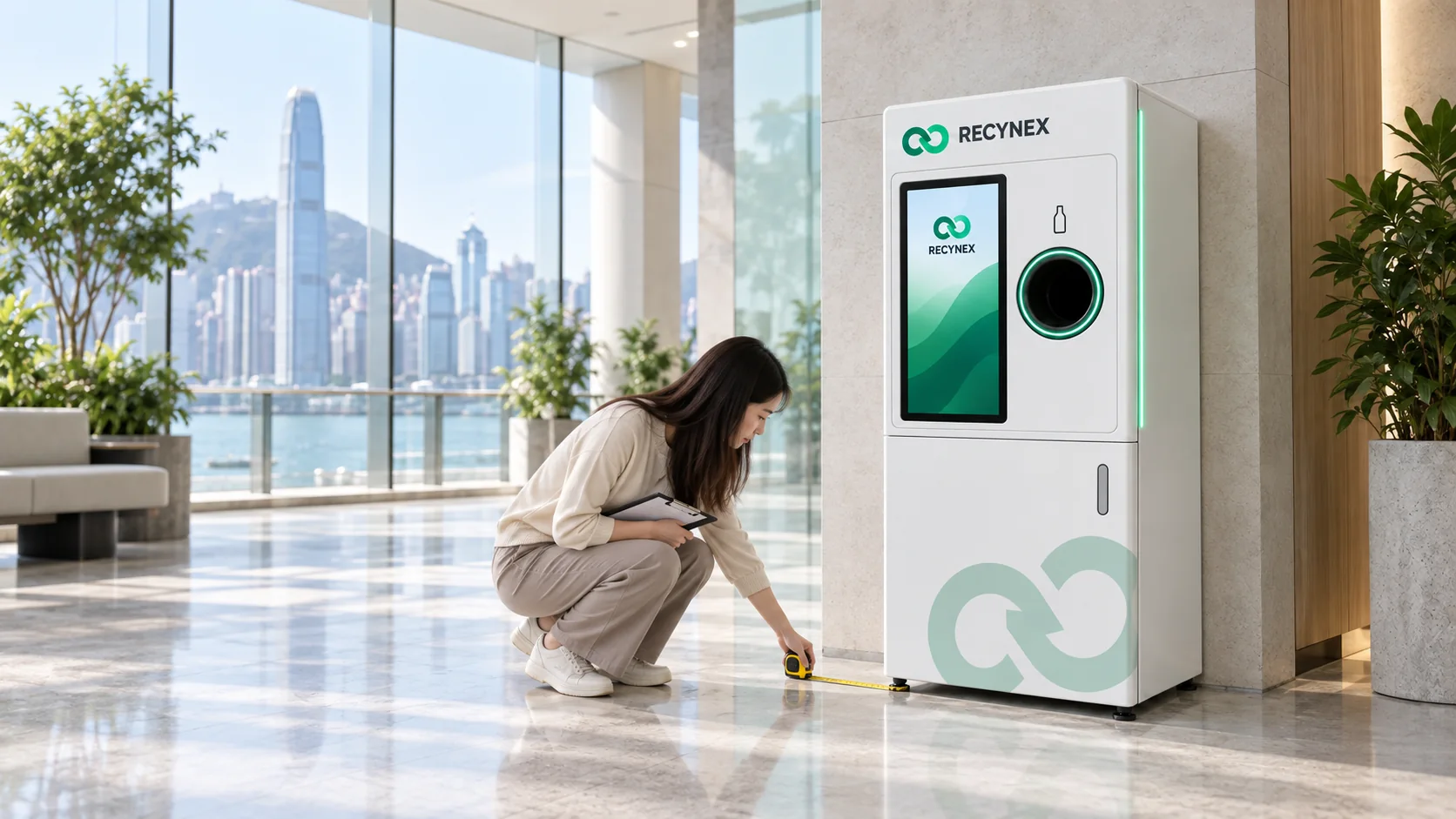
A visible entrance may be convenient for a student but awkward for a collector carrying a full container through a crowded corridor. Draw both paths on the same campus map. Look at waiting space, door swings, power, connectivity, accessibility and the route to the storage or loading area. Visit at a class change or lunchtime, not only during a quiet survey appointment.
| Campus setting | Question to resolve before choosing equipment |
|---|---|
| Café or food court | Can people sort and queue without blocking serving or circulation? |
| Library or learning space | Are instructions and service visits compatible with the space’s use? |
| Residence hall | Who can inspect and collect when facilities staff are off shift? |
| Event venue | How will peaks, temporary packaging and final material handover be managed? |
A sustainability office may sponsor the programme while facilities staff respond to faults and a contractor collects material. Bring those teams into the design meeting. Decide who changes a full container, cleans the approach, updates signs, answers a rejected-item question and closes a point that cannot accept returns. Give each task a primary owner and a backup for holidays and term breaks.
If several buildings are involved, a shared RECYNEX Cloud view can be scoped for station status and tasks. The records still need local context: the library’s service window may differ from a residence hall’s, and a central alert cannot open a locked loading area. Keep the collection handover visible rather than treating a cleared alert as proof that material moved.
Select a location that represents a realistic operating challenge. Record accepted and rejected formats, peak queue conditions, full-storage events, staff interventions and the collection route. Ask people working nearby what visitors found confusing. If a student repeatedly arrives with an excluded package, improve the instructions or provide an alternative route; do not quietly expand the accepted list without testing.
Agree the pilot’s decision criteria before launch. A useful result says whether this configuration works at this site, what needs changing and which other locations share the same conditions. It does not turn one site’s counts into a campus-wide recycling or carbon claim. The pilot acceptance guide provides a structure for the decision.
Send a map with candidate locations, photographs during busy periods, representative packaging, the material receiver’s requirements and the teams responsible for collection and service. Include catering and event calendars if they affect demand. Discuss a campus return project or review the campus solution before specifying a cabinet.
Assess weather exposure, utilities, user approach, security and service access before specifying an outdoor bottle and can return point.
Read moreA practical guide to planning a residential bottle-and-can return point around shared-space access, resident instructions, collection and building management.
Read morePlan a supermarket return point around peak queues, store circulation, accepted containers and back-of-house collection rather than a headline throughput figure.
Read moreShare the location, container stream, operating team and systems already in place.