Practical guide
How to Choose a Reverse Vending Machine
Compare RVMs using your container stream, floor space, collection routine, software needs and supplier scope—not a single headline capacity claim.
Reviewed Read moreA compact-store buying guide to container eligibility, queue space, staff tasks and collection access before choosing a reverse vending machine.
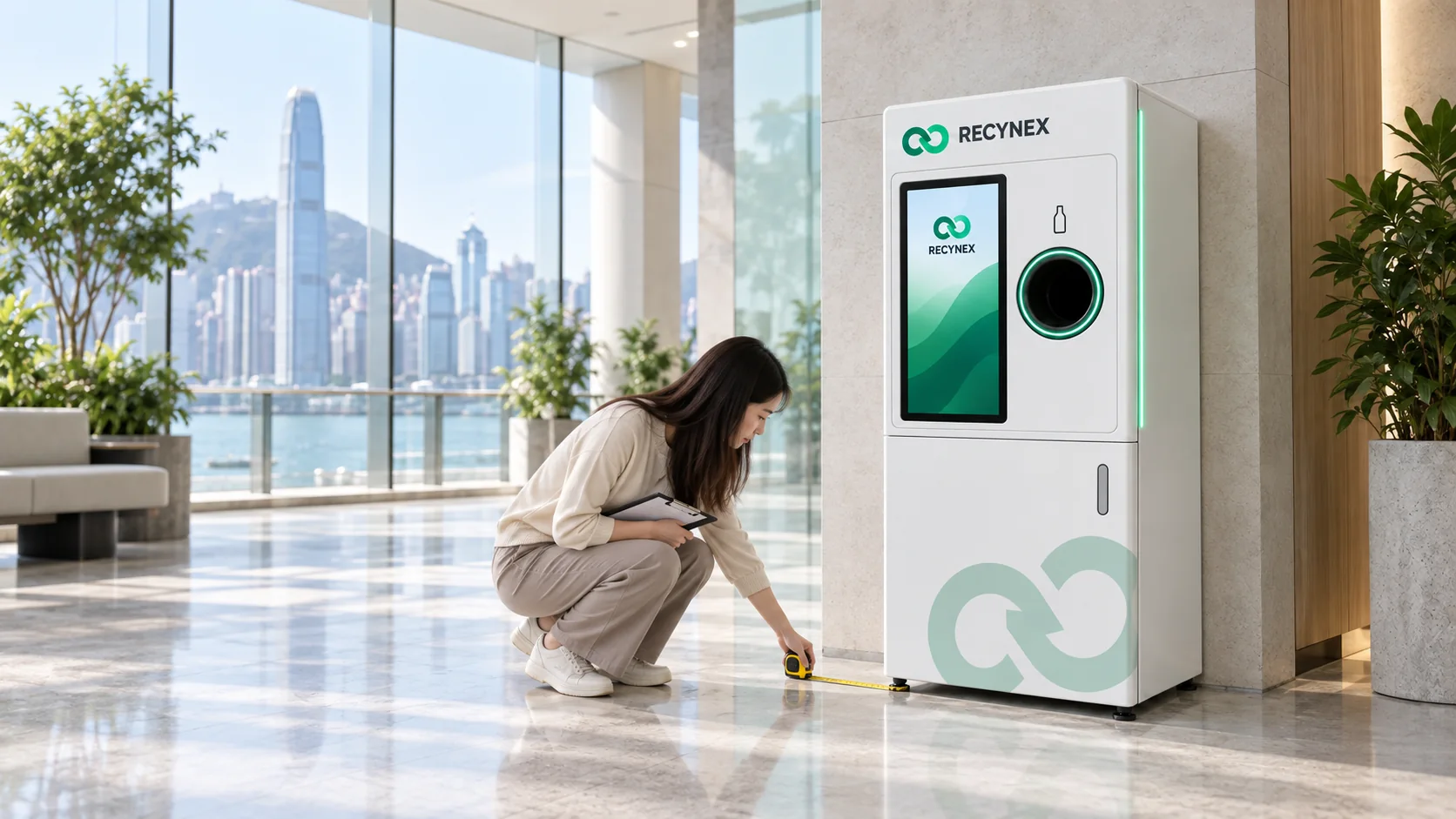
A convenience store can offer a useful return point without giving it a large floor area. The difficult part is fitting customer returns, staff access and material removal into the same small footprint. Compare the whole operating space, not just the cabinet width.
List the actual beverage formats customers bring, then mark each as included, excluded or needing a sample test. A deposit scheme’s eligibility list, a brand programme’s rules and the physical formats a machine can handle are separate decisions. Keep a clear instruction for a rejected item; otherwise staff will have to explain exceptions at the till.
The packaging qualification guide gives a sample-by-sample method. Use it before asking a supplier for a final configuration.
This is also where a store manager’s knowledge matters. Ask staff what customers already try to leave behind the counter, not just what a scheme says should arrive. A recurring out-of-scope item is a signage and service issue even if the machine rejects it correctly. When the eligible list changes, someone must update the on-screen message, the sign at the approach and the staff’s answer at the same time.
The visitor path runs from entrance to intake and back into the shop. The operator path runs from the service access point to a safe removal route. Mark where a queue would stand, how a door opens, where a collection container moves and whether any path crosses a checkout or emergency circulation route. A cabinet that fits between shelves may still be impossible to empty there.
| Store question | Evidence to collect | Decision to make |
|---|---|---|
| Which packages are eligible? | Sample list and programme rules | Accepted set and reject message |
| Where will people wait? | Floor plan and busiest periods | Position and customer instructions |
| Who checks the machine? | Staff roster and shift handover | Named daily owner and escalation path |
| How does material leave? | Storage location and collection route | Container exchange and collection owner |
Try the proposed position during a delivery and during the busiest checkout period. Stand where a visitor would stand with a bag and watch whether another person can pass with a trolley. Then open the service access area on the plan and imagine a full container being removed. This exercise often reveals a conflict that a photograph of an empty shop misses.
Estimate returns by hour and by day using your own store observations or a defined pilot. Ask how the proposed storage arrangement affects collection frequency, staff interruptions and cleaning. Request capacity claims with the exact container mix and test conditions; an unqualified number cannot predict a busy Friday at your site.
RECYNEX Mini is the compact-family starting point, while One may suit a different holding and service plan. The choice follows the measured site and qualified stream, not a name alone. For multiple stores, also decide whether Cloud should give an operator one view of exceptions and collection tasks.
Small stores rarely have a spare employee waiting beside the equipment. Agree what happens when storage is full, a container is rejected repeatedly or the unit is unavailable. The visitor needs a clear message; the cashier needs a short answer; the operator needs a route to restore service. If another return point is nearby, make sure any direction to it is accurate and maintained. An instruction that simply says “ask staff” can move the queue to the till.
For a small chain, write one operating playbook but allow each store to record its own collection window and escalation contact. A standard setup is useful only if the differences between sites are visible. The maintenance checklist can be adapted into a shift check, while collection planning helps test whether the proposed route is realistic.
Choose a site with ordinary staff coverage and a representative customer mix, not only the tidiest location. During the pilot, log accepted and rejected formats, peak-time waiting, staff interventions and the time between a full signal and material removal. Review the notes with the people who actually worked the shifts. If they are repeatedly answering the same question, change the instruction or the format rules before expanding to more stores.
The pilot does not need an invented success target. Set the acceptance measures with the retailer and programme owner before it begins, then compare observations with those agreed measures. Keep open issues in the rollout pack so the next store does not inherit an unresolved problem.
Include a floor plan, photographs of the proposed position, a packaging sample list, estimated return pattern and the person who will remove material. Note power, connectivity and opening hours. Ask for a compact-store configuration with those inputs; the response can then address both the equipment and the staff workflow.
Compare RVMs using your container stream, floor space, collection routine, software needs and supplier scope—not a single headline capacity claim.
Reviewed Read moreA practical guide to planning a residential bottle-and-can return point around shared-space access, resident instructions, collection and building management.
Read moreBuild an RVM request for proposal that compares tested packaging, site fit, software, service, acceptance and commercial exclusions on the same basis.
Read moreShare the location, container stream, operating team and systems already in place.