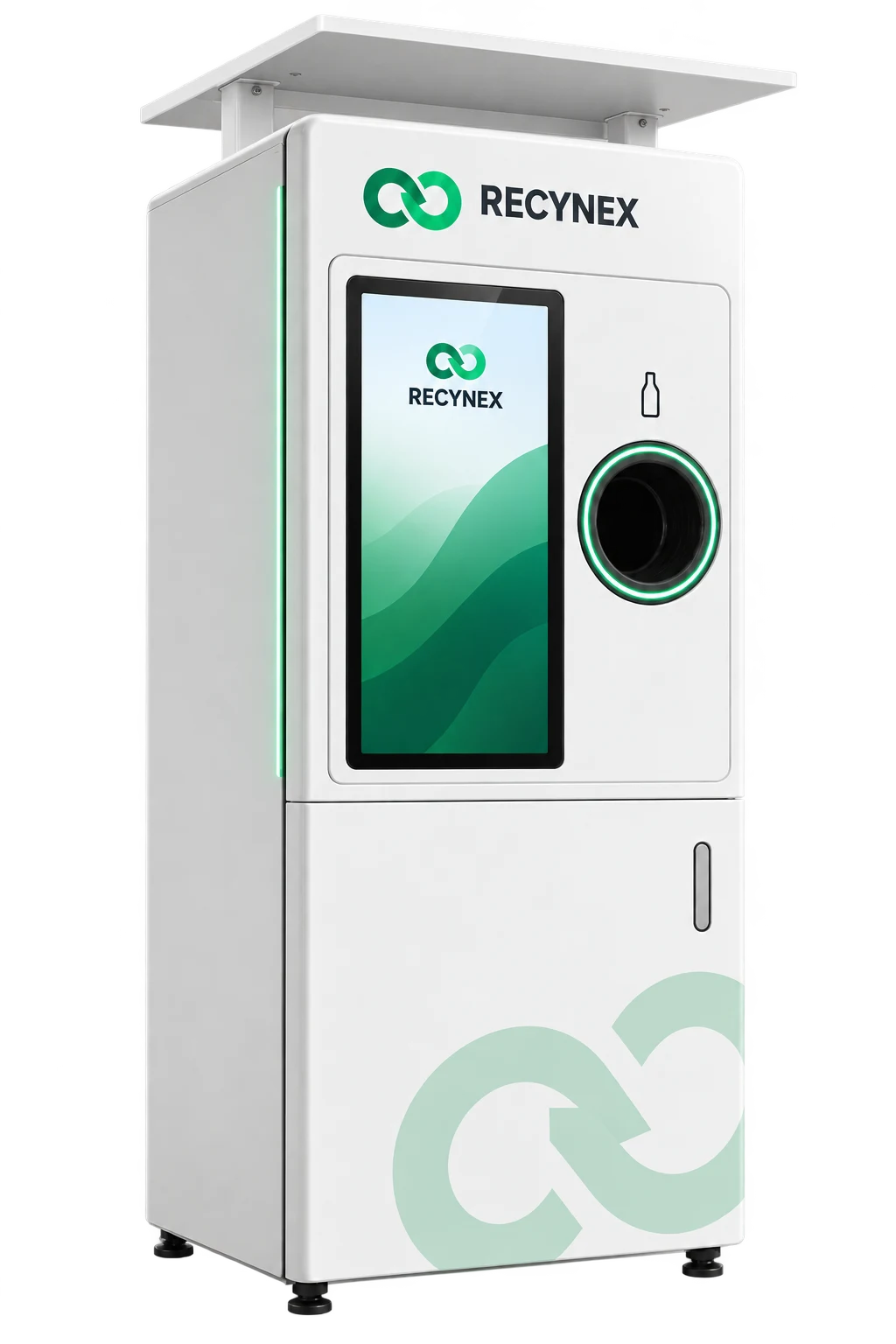
Measure a brand return programme without overstating impact
Separate participation, verified equipment events, material handover and downstream outcomes in a brand programme report.
Reviewed Lire la suiteGUIDES DE PROJET

Lisez les guides pratiques RECYNEX sur le choix des RVM, les bouteilles et canettes, le site, les logiciels, l’intégration et le reporting, ainsi que des observations sectorielles distinctes et sourcées.
COMMENCER PAR VOTRE QUESTION
Suivez un parcours concret, du choix du site et des emballages au plan d’exploitation et à la proposition.
Comparez les flux de contenants, les contraintes du site et les options d’équipement avant de demander un devis.
Planifiez l’implantation, les contrôles du personnel et l’accès de collecte pour le lieu qui sera réellement utilisé.
Définissez les événements de retour vérifiés, les récompenses et le reporting avant de relier un autre système.
GUIDES D’ACHAT ET D’EXPLOITATION
Recherchez par sujet ou parcourez toute la bibliothèque. Les observations sur les entreprises sont des lectures sourcées d’informations publiques.
37 articles
Ces guides et articles sont actuellement disponibles en anglais.
Separate participation, verified equipment events, material handover and downstream outcomes in a brand programme report.
Reviewed Lire la suiteA buyer's method for separating PET, cans, glass and exceptions before selecting intake equipment.
Reviewed Lire la suiteA reading of public packaging priorities, followed by a practical checklist for return-point projects.
Reviewed Lire la suiteUnderstand the different rules, evidence and reconciliation needs behind a deposit refund, a brand-funded reward and a return point with no incentive.
Lire la suiteCompare refillable bottle, intact-glass and cullet routes, then define breakage controls, eligible formats and staff handover for a glass return point.
Lire la suiteTurn one validated return point into a repeatable network plan for equipment, collection, software and service.
Reviewed Lire la suiteDefine queueing, replay, deduplication and reconciliation before connecting return equipment to another system.
Reviewed Lire la suiteAssess weather exposure, utilities, user approach, security and service access before specifying an outdoor bottle and can return point.
Lire la suiteSet sample, site, event and operator acceptance criteria before committing to a wider equipment order.
Reviewed Lire la suiteA practical guide to planning a residential bottle-and-can return point around shared-space access, resident instructions, collection and building management.
Lire la suiteA compact-store buying guide to container eligibility, queue space, staff tasks and collection access before choosing a reverse vending machine.
Lire la suitePlan a supermarket return point around peak queues, store circulation, accepted containers and back-of-house collection rather than a headline throughput figure.
Lire la suitePlan a campus bottle-and-can return point around student journeys, catering packaging, term-time peaks, facilities ownership and accountable collection.
Lire la suiteA practical daily, event-driven and service handover checklist for RVM operators, with clear ownership and records rather than assumed service intervals.
Lire la suiteBuild an RVM request for proposal that compares tested packaging, site fit, software, service, acceptance and commercial exclusions on the same basis.
Lire la suiteDesign the boundary between a physically accepted container, programme eligibility and a reward ledger.
Reviewed Lire la suiteEstimate return-point collection intervals from real container mix, peak demand, storage rules and route ownership rather than a generic machine capacity.
Lire la suiteUnderstand how a reverse vending machine accepts containers, where deposit rules fit, and what a buyer should check before selecting an RVM.
Lire la suiteWhy a beverage return point should not be described as a universal packaging solution.
Reviewed Lire la suiteA packaging portfolio is not an equipment compatibility list. Separate formats, residues and downstream requirements.
Reviewed Lire la suiteA product-range observation and a practical way to structure bottle qualification.
Reviewed Lire la suitePublic company context and a proposed event-operation checklist, not a customer announcement.
Reviewed Lire la suiteA planning checklist covering the user approach, service clearance, power, network and collection handover.
Reviewed Lire la suiteA proposed event model that keeps UI feedback separate from the physical event and the reward ledger.
Reviewed Lire la suiteA RECYNEX design note on the white cabinet, green circular-link mark and a calmer interface language.
Reviewed Lire la suiteMake a return network more reliable by assigning each signal to a clear next step.
Reviewed Lire la suiteAlign packaging rules, customer experience, reward accounting and campaign reporting.
Reviewed Lire la suiteCompare RVMs using your container stream, floor space, collection routine, software needs and supplier scope—not a single headline capacity claim.
Reviewed Lire la suiteConnect the physical removal of materials to an accountable operations record.
Reviewed Lire la suiteSeparate the equipment, subscription, integration and service scopes so a quotation can be compared.
Reviewed Lire la suiteA practical starting point for connecting return equipment to an operator system.
Reviewed Lire la suiteCompare compact and standard RECYNEX configurations around the actual visitor and service flow.
Reviewed Lire la suitePrepare site staff for the visitor journey, collection, cleaning and escalation.
Reviewed Lire la suiteBuild an evidence-based acceptance list for the containers your project wants to collect.
Reviewed Lire la suiteUnderstand the cost lines in an RVM project: selected equipment, site work, software, integrations, installation, training, collection and ongoing support.
Reviewed Lire la suiteMeasure the work a team can act on without confusing return events with downstream outcomes.
Reviewed Lire la suiteA practical walk-through of location, access, utilities and daily operation before equipment configuration.
Reviewed Lire la suiteAucun article correspondant. Essayez une autre recherche.
Commencez par la question à laquelle votre équipe doit répondre : quels emballages sont admissibles, quelle machine convient au site, comment les matières seront collectées ou comment un retour accepté atteint un autre système. Nos guides proposent une méthode de travail et une prochaine étape. Les observations sur les entreprises utilisent des informations publiques sourcées et ne représentent pas des cas clients RECYNEX.
| Votre décision | Commencer ici |
|---|---|
| Choisir un format de magasin | Points de retour en commerce de proximité (en anglais) ou points de retour en supermarché (en anglais) |
| Qualifier un lieu ou une matière spécifique | Planification d’un site extérieur (en anglais) ou systèmes de retour des bouteilles en verre (en anglais) |
| Définir le modèle d’exploitation | Responsabilités de maintenance (en anglais) et fréquence de collecte (en anglais) |
| Préparer un programme ou un achat | Consigne et règles de récompense (en anglais) et spécification d’appel d’offres RVM (en anglais) |
Dites-nous quels emballages vous souhaitez collecter et où. Nous pouvons vous aider à préciser les autres détails.
Pouvons-nous utiliser Google Analytics pour comprendre quelles pages aident les visiteurs ? Votre choix ne change rien à vos demandes. Vous pouvez le modifier à tout moment dans les préférences de mesure d’audience. Avis de confidentialité